What Is Astrology? Vedic Birth Charts and the 12 Houses
Astrology is a traditional system for interpreting the positions of celestial bodies as symbols of human experience. In Indian astrology, often called Jyotisha or Vedic astrology, a birth chart provides a structured way to discuss temperament, responsibilities, relationships, work and periods of change. This introduction explains the chart's building blocks, how astrologers combine them and where careful judgement matters. It is not a promise that anyone's future can be known with certainty.
Understanding the video in context: A birth-chart reading goes beyond a general Sun-sign horoscope. Three useful ideas to explore are the ascendant (Lagna), the twelve houses (Bhavas) and the relationships among the grahas. The explanations below introduce these concepts and show how they are considered together when discussing an individual question.

A chart offers a framework for discussion rather than a guaranteed prediction. Begin with the ascendant, then examine the signs, house positions and planetary relationships before considering a life question.
How is a Vedic birth chart made?
A Janma Kundali, or natal chart, is calculated from a person's date, recorded birth time and birthplace. A chart places the ascendant (Lagna), zodiac signs and grahas in relation to twelve houses. Many Vedic methods use a sidereal zodiac with an explicitly selected ayanamsha; calculations can differ if settings or birth details differ. A few minutes can matter for house boundaries, so an uncertain birth time must be disclosed rather than quietly guessed.
Three terms are easy to confuse. A sign (Rashi) is a section of the zodiac; a house (Bhava) represents a life area; and a graha is an interpretive factor placed in the chart. The Sun, Moon and visible planets are used alongside Rahu and Ketu, which are lunar nodes—not physical planets. The Moon sign and Nakshatra are important in many Indian traditions, but a serious chart reading is not based on the Moon sign alone.

A person facing repeated setbacks may want an instant answer, but chart interpretation should begin with a specific question and reliable birth details. Career and relationship themes involve multiple houses and should be considered alongside practical circumstances.
What do the 12 houses of a Kundali represent?
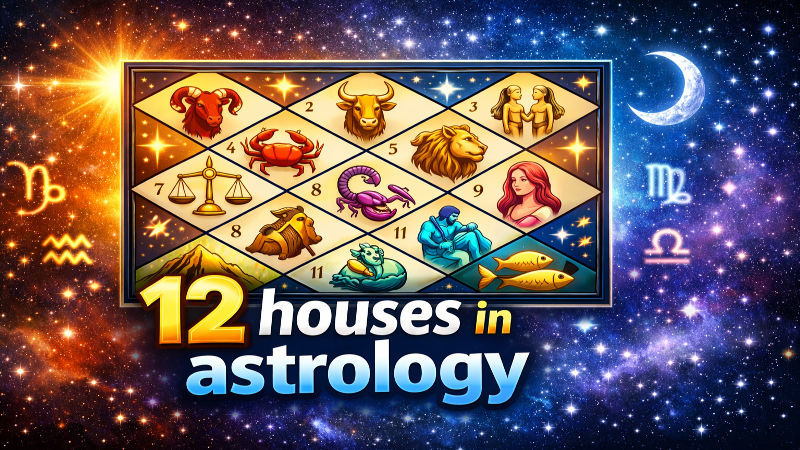
About the twelve-house illustration: Think of the chart as twelve areas of life, not twelve separate predictions. A house's meaning depends on its sign, ruler, occupants, aspects and the full chart. The illustration is a reading aid; it does not determine any outcome by itself.
- First house — self and approach: identity, physical presentation and the way a person meets life.
- Second house — resources and speech: family resources, possessions, speech and personal values.
- Third house — effort and communication: initiative, skills, siblings and short journeys.
- Fourth house — home and foundations: domestic life, property, emotional security and care.
- Fifth house — learning and creativity: education, creativity, children and speculative interests.
- Sixth house — duties and obstacles: routines, service, competition, disputes and health-related themes.
- Seventh house — partnership: marriage, committed relationships and business partnerships.
- Eighth house — shared matters and change: joint resources, uncertainty, inheritance and transformation.
- Ninth house — learning and worldview: higher study, teachers, ethics and long-distance journeys.
- Tenth house — profession and public role: career responsibilities, work and reputation.
- Eleventh house — networks and gains: friendships, associations, aims and benefits from effort.
- Twelfth house — retreat and expenditure: costs, solitude, sleep, foreign connections and spiritual reflection.
A frequent mistake is treating the seventh house as proof of when marriage will occur or the tenth house as a guarantee of professional success. Both are starting points for questions, not stand-alone verdicts.
How do grahas, signs and timing work together?

About the graha illustration: The graphic can help identify the traditional nine grahas. Their meanings are symbolic and context-dependent: for example, Shani is associated with discipline and endurance, while Budha is associated with language and analysis. Neither association is a fixed prediction about an individual.
In a typical reading, the astrologer examines house rulership, planetary placement and strength, aspects (drishti), combinations (yoga) and supporting divisional charts where justified. A Dasha system describes symbolic periods used for timing, while Gochar, or transits, describes changing planetary positions. They are considered alongside natal placements; an isolated transit headline should not replace an actual chart assessment.
A practical example: career uncertainty
Suppose someone asks whether a job change is suitable. Rather than searching for one “career planet”, an astrologer may consider the tenth house and its ruler, relevant houses of income and work, and the periods currently being interpreted. For a deeper discussion of career uncertainty and job changes, see the related guide. A responsible discussion also asks about qualifications, available opportunities, financial reserves and personal priorities. The practical decision remains the client's own.
A practical example: marriage compatibility
A single Moon sign or a high matching score cannot describe the whole relationship. Traditional assessments may consider the seventh house, Moon and Venus factors, Dasha context and relevant divisional charts, but trust, communication, safety and consent carry real-world importance. The guide to relationship difficulties and recurring patterns offers further context. For a more detailed assessment, the website already provides a Kundali Matching service and a Love Compatibility Calculator. Both are accessible from the main navigation; a matching score or calculator result should not be treated as a guarantee of relationship success.

Astrology-related guidance is most useful when it helps someone clarify a concern and weigh real options. An interpretation cannot replace evidence, sound planning or personal choice, particularly when relationships, work or finances are involved.
How to read astrology responsibly
Astrology is part of a long cultural and interpretive tradition; its claimed power to predict personal events has not been established by reliable scientific evidence. A useful consultation should therefore make methods and uncertainties clear, avoid fear-based guarantees and leave room for individual choice. See also the guide discussing the limitations of medical astrology. Never substitute astrological advice for qualified medical care, legal counsel or regulated financial advice.
If you do not know your birth time, say so. An astrologer should explain which chart features remain uncertain instead of inventing a precise ascendant. Ask what assumptions were used, how alternatives were considered and what practical steps you can evaluate independently.

Before booking a reading, gather the most reliable birth details available and write down one or two questions. Use the existing consultation channels on this website rather than submitting personal information on a public page.
What should you prepare for a Vedic astrology consultation?
Bring your date of birth, the most reliable available time, your birthplace and one or two specific questions. Distinguish confirmed records from family recollection. A focused question—“What factors should I consider before changing jobs?”—is more actionable than demanding a guaranteed date for success.
If you would like to view a calculated chart before arranging a discussion, the Vedic Astrology chart generator is available in the main navigation. For a personal reading, use the consultation options or Astrology Assistant on this website. Avoid sharing private birth information in public comments.
Frequently asked questions
Is Vedic astrology the same as a daily Sun-sign horoscope?
No. A personalised Vedic chart generally uses birth date, time and location, while a public sign forecast gives broad statements to many readers. They serve different purposes and should not be confused.
Why can two people with the same zodiac sign have different charts?
Their birth times and places can produce different ascendants, house placements and other chart factors. Even charts with similar placements cannot determine identical life outcomes.
Are Rahu and Ketu planets?
In Jyotisha they are counted among the nine grahas, but astronomically they are the Moon's ascending and descending orbital nodes, not physical planets.
Can astrology guarantee a marriage, promotion or medical outcome?
No. Interpretations are not guarantees. Health, relationship and financial decisions require evidence, professional advice where appropriate and the judgement of the people affected.
Read this article in Hindi (हिंदी अनुवाद)
ज्योतिष क्या है? वैदिक जन्मकुंडली और बारह भावों की व्यावहारिक मार्गदर्शिका
ज्योतिष एक पारंपरिक पद्धति है, जिसमें आकाशीय पिंडों की स्थितियों को मानव अनुभव से जुड़े प्रतीकों के रूप में समझा जाता है। भारतीय ज्योतिष, जिसे ज्योतिष शास्त्र या वैदिक ज्योतिष भी कहा जाता है, में जन्मकुंडली के माध्यम से स्वभाव, जिम्मेदारियों, संबंधों, कार्य और जीवन में बदलाव के दौर पर व्यवस्थित चर्चा की जाती है। इस लेख में कुंडली के मूल तत्व, उनके संयुक्त विश्लेषण का तरीका और विवेकपूर्ण निर्णय का महत्व समझाया गया है। इसका अर्थ यह नहीं है कि किसी का भविष्य पूरी निश्चितता से बताया जा सकता है।
वीडियो को समझने की पृष्ठभूमि: व्यक्तिगत जन्मकुंडली का अध्ययन केवल सूर्य-राशि के सामान्य राशिफल से आगे जाता है। इसमें तीन बातों को समझना उपयोगी है—लग्न, बारह भाव और ग्रहों के परस्पर संबंध। नीचे दिए गए विवरण में समझाया गया है कि किसी व्यक्तिगत प्रश्न पर विचार करते समय इन सभी संकेतों को एक साथ कैसे देखा जाता है।
ज्योतिष के परिचय चित्र से जुड़ी बात: जन्मकुंडली में राशियाँ, ग्रह और बारह भाव एक साथ देखे जाते हैं। यह किसी निश्चित भविष्यवाणी का प्रमाण नहीं, बल्कि पारंपरिक विश्लेषण की एक रूपरेखा है। पहले लग्न, फिर ग्रहों की स्थिति और भावों के आपसी संबंधों को पूरे संदर्भ में समझना उचित है।
वैदिक जन्मकुंडली कैसे बनती है?
जन्मकुंडली की गणना व्यक्ति की जन्मतिथि, दर्ज जन्मसमय और जन्मस्थान के आधार पर की जाती है। इसमें लग्न, राशियों और ग्रहों को बारह भावों के संदर्भ में दर्शाया जाता है। कई वैदिक गणना-पद्धतियों में चुने हुए अयनांश के साथ निरयन राशिचक्र का उपयोग होता है; जन्मविवरण या गणना की सेटिंग बदलने पर परिणाम भी बदल सकते हैं। भावों की सीमाओं के लिए कुछ मिनटों का अंतर भी महत्वपूर्ण हो सकता है। इसलिए जन्मसमय अनिश्चित हो तो उसे स्पष्ट बताना चाहिए, अनुमान को तथ्य की तरह नहीं दिखाना चाहिए।
तीन शब्दों में अक्सर भ्रम होता है। राशि राशिचक्र का एक भाग है; भाव जीवन के किसी क्षेत्र को दर्शाता है; और ग्रह कुंडली में प्रयुक्त व्याख्यात्मक कारक है। सूर्य, चंद्रमा तथा दिखाई देने वाले ग्रहों के साथ राहु और केतु भी शामिल किए जाते हैं। राहु और केतु वास्तविक भौतिक ग्रह नहीं, बल्कि चंद्रमा की कक्षा के नोड हैं। भारतीय परंपराओं में चंद्रराशि और नक्षत्र महत्वपूर्ण हैं, लेकिन गंभीर कुंडली विश्लेषण केवल चंद्रराशि पर आधारित नहीं होता।
जन्मकुंडली से जुड़ी जीवन-समस्याएँ: करियर या संबंधों में बार-बार कठिनाई आने पर व्यक्ति तुरंत उत्तर चाह सकता है। लेकिन किसी निष्कर्ष से पहले स्पष्ट प्रश्न, विश्वसनीय जन्मविवरण और वास्तविक परिस्थितियों पर ध्यान देना चाहिए। अलग-अलग भावों को मिलाकर देखना अधिक उचित है।
कुंडली के बारह भाव क्या दर्शाते हैं?
बारह भावों के चित्र के बारे में: कुंडली को जीवन के बारह क्षेत्रों की रूपरेखा के रूप में समझें, बारह अलग-अलग निश्चित भविष्यवाणियों के रूप में नहीं। किसी भाव का अर्थ उससे जुड़ी राशि, स्वामी ग्रह, उसमें स्थित ग्रहों, दृष्टियों और पूरी कुंडली के संदर्भ में समझा जाता है। यह चित्र समझने में सहायता करता है; अकेले इससे कोई परिणाम तय नहीं होता।
- पहला भाव — स्वयं और जीवन-दृष्टिकोण: पहचान, शारीरिक प्रस्तुति और परिस्थितियों का सामना करने का तरीका।
- दूसरा भाव — संसाधन और वाणी: पारिवारिक संसाधन, संपत्ति, बोलचाल और व्यक्तिगत मूल्य।
- तीसरा भाव — प्रयास और संवाद: पहल, कौशल, भाई-बहन और छोटी यात्राएँ।
- चौथा भाव — घर और आधार: घरेलू जीवन, संपत्ति, भावनात्मक सुरक्षा और देखभाल।
- पाँचवाँ भाव — अध्ययन और सृजनशीलता: शिक्षा, रचनात्मकता, संतान और सट्टात्मक रुचियाँ।
- छठा भाव — दायित्व और चुनौतियाँ: दिनचर्या, सेवा, प्रतिस्पर्धा, विवाद और स्वास्थ्य से जुड़े विषय।
- सातवाँ भाव — साझेदारी: विवाह, प्रतिबद्ध संबंध और व्यावसायिक साझेदारी।
- आठवाँ भाव — साझा विषय और परिवर्तन: संयुक्त संसाधन, अनिश्चितता, विरासत और गहरे बदलाव।
- नौवाँ भाव — उच्च शिक्षा और जीवन-दर्शन: आगे की पढ़ाई, गुरु, नैतिकता और लंबी यात्राएँ।
- दसवाँ भाव — पेशा और सार्वजनिक भूमिका: करियर संबंधी जिम्मेदारियाँ, काम और प्रतिष्ठा।
- ग्यारहवाँ भाव — संपर्क और लाभ: मित्र, समूह, लक्ष्य तथा प्रयासों से मिलने वाले लाभ।
- बारहवाँ भाव — एकांत और व्यय: खर्च, एकांत, नींद, विदेश संबंध और आध्यात्मिक चिंतन।
एक सामान्य भूल यह मान लेना है कि केवल सातवाँ भाव विवाह की तारीख सिद्ध कर देगा या दसवाँ भाव नौकरी में सफलता की गारंटी दे देगा। ये विषय पर विचार शुरू करने के संकेत हैं, अपने-आप में अंतिम निष्कर्ष नहीं।
ग्रह, राशियाँ और समय के संकेत कैसे साथ काम करते हैं?
ग्रहों के चित्र के बारे में: यह चित्र पारंपरिक नौ ग्रहों को पहचानने में सहायक हो सकता है। उनके अर्थ प्रतीकात्मक होते हैं और संदर्भ के अनुसार समझे जाते हैं। उदाहरण के लिए शनि को अनुशासन और धैर्य तथा बुध को भाषा और विश्लेषण से जोड़ा जाता है। इन संबंधों से किसी व्यक्ति के जीवन की निश्चित भविष्यवाणी नहीं हो जाती।
सामान्य विश्लेषण में ज्योतिषी भावों के स्वामित्व, ग्रहस्थिति और बल, दृष्टि, योग तथा आवश्यक होने पर संबंधित वर्गकुंडलियों को देखता है। दशा पद्धति पारंपरिक समय-अवधियों का संकेत देती है, जबकि गोचर समय के साथ बदलती ग्रहस्थितियों को दर्शाता है। इनका अर्थ जन्मकुंडली के संदर्भ में लिया जाता है; किसी एक गोचर के बारे में सामान्य शीर्षक पूरी कुंडली के अध्ययन का विकल्प नहीं है।
व्यावहारिक उदाहरण: करियर को लेकर अनिश्चितता
मान लें कोई व्यक्ति पूछता है कि नौकरी बदलना उचित होगा या नहीं। केवल एक “करियर ग्रह” खोजने के बजाय ज्योतिषी दसवें भाव और उसके स्वामी, आय एवं कार्य से जुड़े अन्य भावों और संबंधित दशाओं को देख सकता है। जिम्मेदार चर्चा में योग्यता, उपलब्ध अवसर, आर्थिक बचत और व्यक्तिगत प्राथमिकताएँ भी शामिल होनी चाहिए। वास्तविक निर्णय व्यक्ति का अपना होता है।
व्यावहारिक उदाहरण: वैवाहिक अनुकूलता
केवल एक चंद्रराशि या ऊँचा मिलान-अंक पूरे संबंध की तस्वीर नहीं बताता। पारंपरिक अध्ययन में सातवाँ भाव, चंद्रमा तथा शुक्र से जुड़े संकेत, दशा और आवश्यक वर्गकुंडलियाँ देखी जा सकती हैं। इसके साथ विश्वास, संवाद, सुरक्षा और आपसी सहमति का वास्तविक जीवन में बहुत महत्व है। विस्तृत अध्ययन के लिए वेबसाइट पर कुंडली मिलान की सुविधा तथा प्रेम अनुकूलता कैलकुलेटर पहले से मौजूद हैं। दोनों विकल्प ऊपर के मुख्य नेविगेशन में उपलब्ध हैं। मिलान-अंक या कैलकुलेटर का परिणाम किसी संबंध की सफलता की गारंटी नहीं देता।
व्यक्तिगत मार्गदर्शन का महत्व: किसी ज्योतिषीय चर्चा का उद्देश्य समस्या को स्पष्ट करना और उपलब्ध विकल्पों पर सोचने में सहायता करना होना चाहिए। संबंधों, काम या धन से जुड़े निर्णयों में प्रमाण, व्यावहारिक योजना और व्यक्ति की स्वतंत्र पसंद का महत्व बना रहता है।
ज्योतिष का उपयोग जिम्मेदारी से कैसे करें?
ज्योतिष एक पुरानी सांस्कृतिक और व्याख्यात्मक परंपरा का हिस्सा है; व्यक्तिगत घटनाओं की भविष्यवाणी करने की इसकी कथित क्षमता को विश्वसनीय वैज्ञानिक प्रमाणों से स्थापित नहीं किया गया है। इसलिए उपयोगी परामर्श में पद्धति और अनिश्चितता स्पष्ट होनी चाहिए, भय पैदा करके निश्चित परिणामों के वादे नहीं करने चाहिए और व्यक्ति के स्वतंत्र निर्णय के लिए जगह होनी चाहिए। चिकित्सा, कानूनी या विनियमित वित्तीय मामलों में योग्य विशेषज्ञ की सलाह का स्थान ज्योतिष को कभी नहीं लेना चाहिए।
यदि जन्मसमय पता नहीं है, तो स्पष्ट बताएं। ज्योतिषी को समझाना चाहिए कि कुंडली के कौन-से भाग अनिश्चित हैं; उसे मनगढ़ंत सटीक लग्न प्रस्तुत नहीं करना चाहिए। पूछें कि गणना में कौन-सी मान्यताएँ ली गईं, विकल्प कैसे देखे गए और किन व्यावहारिक कदमों का आप स्वतंत्र रूप से मूल्यांकन कर सकते हैं।
परामर्श से पहले तैयारी: जन्म के उपलब्ध सबसे विश्वसनीय विवरण तैयार रखें और अपने एक-दो प्रश्न लिख लें। इस वेबसाइट के मौजूदा व्यक्तिगत परामर्श विकल्पों का उपयोग करें; निजी जन्मविवरण सार्वजनिक टिप्पणी में साझा न करें।
वैदिक ज्योतिष परामर्श के लिए क्या तैयारी करें?
अपनी जन्मतिथि, उपलब्ध सबसे विश्वसनीय जन्मसमय, जन्मस्थान और एक-दो स्पष्ट प्रश्न साथ रखें। आधिकारिक रिकॉर्ड और परिवार की याद से बताए गए समय के बीच अंतर स्पष्ट करें। “नौकरी बदलने से पहले किन बातों पर विचार करूँ?” जैसा प्रश्न सफलता की निश्चित तारीख मांगने की तुलना में अधिक उपयोगी होता है।
व्यक्तिगत परामर्श से पहले गणना की गई कुंडली देखना चाहें, तो मुख्य नेविगेशन में उपलब्ध वैदिक ज्योतिष कुंडली जनरेटर का उपयोग कर सकते हैं। अपने प्रश्नों पर व्यक्तिगत चर्चा के लिए वेबसाइट पर दिए गए परामर्श विकल्प या ज्योतिष सहायक की मदद लें। निजी जन्मविवरण सार्वजनिक टिप्पणियों में साझा करने से बचें।
अक्सर पूछे जाने वाले प्रश्न
क्या वैदिक ज्योतिष और दैनिक सूर्य-राशि राशिफल एक ही चीज हैं?
नहीं। व्यक्तिगत वैदिक कुंडली में सामान्यतः जन्मतिथि, जन्मसमय और जन्मस्थान का उपयोग किया जाता है, जबकि सार्वजनिक राशि-फल अनेक लोगों के लिए सामान्य बातें बताता है। दोनों का उद्देश्य अलग है और इन्हें एक जैसा नहीं मानना चाहिए।
एक ही राशि के दो लोगों की कुंडलियाँ अलग क्यों हो सकती हैं?
जन्मसमय और जन्मस्थान अलग होने पर लग्न, भावों में ग्रहस्थिति और कुंडली के दूसरे कारक बदल सकते हैं। लगभग समान ग्रहस्थितियाँ भी जीवन के एक जैसे परिणाम तय नहीं करतीं।
क्या राहु और केतु ग्रह हैं?
ज्योतिष शास्त्र में इन्हें नौ ग्रहों में गिना जाता है, लेकिन खगोल-विज्ञान की दृष्टि से ये चंद्रमा की कक्षा के आरोही और अवरोही नोड हैं, भौतिक ग्रह नहीं।
क्या ज्योतिष विवाह, पदोन्नति या स्वास्थ्य के परिणाम की गारंटी दे सकता है?
नहीं। ज्योतिषीय व्याख्या गारंटी नहीं होती। स्वास्थ्य, संबंध और आर्थिक निर्णयों के लिए प्रमाण, जरूरत के अनुसार पेशेवर सलाह और संबंधित व्यक्तियों का विवेक आवश्यक है।