What Are the Houses of Astrology and How Are They Connected to Mankind
Understanding the 12 Houses in Astrology
When people ask what are the houses of astrology and how are they connected to mankind, they are really asking a deeper question: how does a birth chart describe real human life? In Vedic astrology, the horoscope is divided into 12 houses in astrology, and each house represents one area of living experience. Why does this matter so much? Because a person does not live only through personality or fate; life unfolds through body, family, effort, home, children, health, marriage, crisis, belief, work, gains, and finally letting go. That is why the houses are often treated as the living structure of human experience, not just abstract sections in a chart.
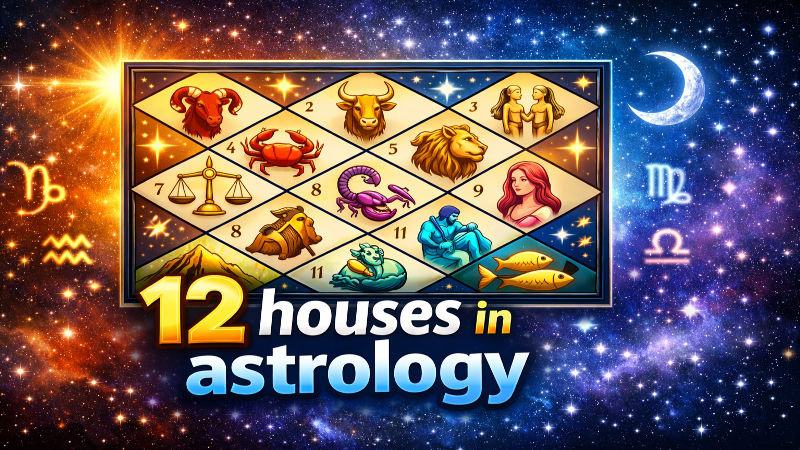
A simple way to understand the houses is this: signs show temperament, planets show energy, and houses show where that energy plays out in life. So if someone wants to understand 12 houses in astrology and their meaning, the answer is not limited to textbook definitions. The houses explain how a human being grows from birth and self-awareness, moves into speech, courage, security, learning, struggle, relationship, transformation, purpose, career, fulfillment, and spiritual release. Isn’t that why the subject feels so personal? A chart becomes meaningful only when the houses are connected to lived reality.
Many people also search for 1 to 12 houses in astrology with rashi, 12 houses in astrology and their lords, or 1 to 12 houses in astrology and their lords. In the natural zodiac model, the first house corresponds with Aries, the second with Taurus, the third with Gemini, and so on until the twelfth house with Pisces. That gives a basic teaching sequence: 1st house–Aries–Mars, 2nd–Taurus–Venus, 3rd–Gemini–Mercury, 4th–Cancer–Moon, 5th–Leo–Sun, 6th–Virgo–Mercury, 7th–Libra–Venus, 8th–Scorpio–Mars, 9th–Sagittarius–Jupiter, 10th–Capricorn–Saturn, 11th–Aquarius–Saturn, 12th–Pisces–Jupiter. But is that the final rule for every kundli? Not exactly. In an actual horoscope, the house lord depends on the sign rising in that specific chart, which is why the ascendant becomes so important.
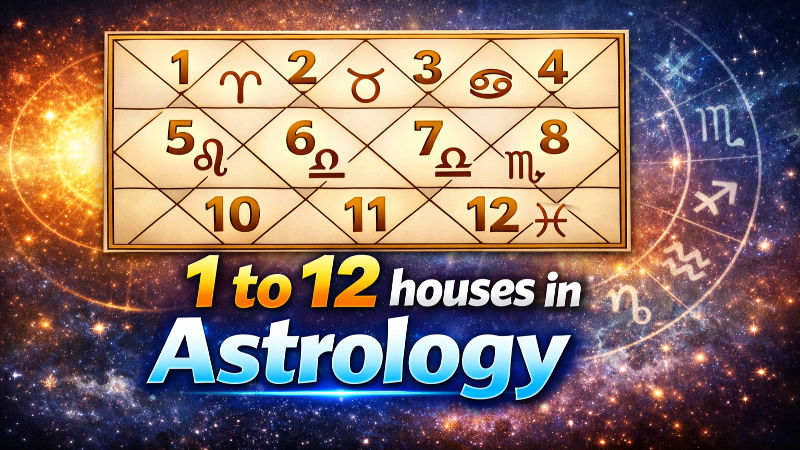
1st House – Tanu Bhava (Self and Identity)
The 1st house, called Tanu Bhava or Lagna, is the house of self. It governs the body, appearance, vitality, attitude, confidence, and the basic way a person meets life. Why do two people with similar backgrounds still carry themselves so differently? The first house is one answer. It shows how someone starts things, how they react, and how life begins to shape around their presence. In the natural sequence, it is linked with Aries and Mars, which is why this house is associated with initiative, identity, and raw life force.
2nd House – Dhana Bhava (Wealth and Values)
The 2nd house, known as Dhana Bhava, deals with wealth, food, speech, family values, and stored resources. People often think this house means money alone, but is income the only thing that sustains a person? Not at all. The second house also shows how someone speaks, what they value, how they build security, and what kind of family imprint shapes early life. In the natural order it connects with Taurus and Venus, which adds themes of stability, nourishment, possessions, and refinement.
3rd House – Parakrama Bhava (Effort and Courage)
The 3rd house, or Parakrama Bhava, is the house of courage, communication, initiative, siblings, skills, and short journeys. This is where effort becomes visible. Why do some people keep trying until they succeed while others hesitate at the first obstacle? The third house speaks to willpower, practical action, learning by doing, and the confidence to express oneself. Linked naturally with Gemini and Mercury, it supports writing, speaking, networking, media, hands-on talent, and the habit of taking the next step instead of waiting for certainty.
4th House – Sukha Bhava (Home and Emotional Security)
The 4th house, called Sukha Bhava, is the house of home, mother, emotional peace, roots, property, and inner comfort. A person may appear successful outside, but what happens when they return home to themselves? That question belongs to the fourth house. It reflects emotional grounding, domestic life, private happiness, and the need for belonging. In the natural sequence it aligns with Cancer and the Moon, which explains why this house is closely tied to nurturing, memory, emotional stability, and the feeling of being safe in one’s own world.
5th House – Putra Bhava (Creativity and Intelligence)
The 5th house, known as Putra Bhava, governs intelligence, children, creativity, love, learning, performance, and merit from past actions. Why is this house considered so special? Because it shows what flows from the heart and mind together. It represents ideas, imagination, romance, self-expression, and the ability to create something meaningful, whether that is a child, a work of art, or a powerful insight. Naturally connected with Leo and the Sun, the fifth house carries themes of brilliance, confidence, recognition, and personal radiance.
6th House – Ripu Bhava (Challenges and Service)
The 6th house, called Ripu Bhava or the house of enemies, is often feared, yet it is one of the most practical houses in astrology. It covers disease, debt, conflict, service, discipline, routine, and competition. Why does human growth so often come through pressure? Because the sixth house shows the daily battles that build resilience. It is not only about obstacles; it is also about solving problems, developing skill, staying accountable, and learning how to function in the real world.
7th House – Yuvati Bhava (Marriage and Partnerships)
The 7th house, called Yuvati Bhava or Kalatra Bhava, represents marriage, committed relationships, business partnerships, agreements, and the public mirror.
8th House – Ayush Bhava (Transformation and Longevity)
The 8th house, known as Ayush Bhava or Randhra Bhava, is the house of longevity, secrets, inheritance, vulnerability, research, occult knowledge, and deep transformation.
9th House – Bhagya Bhava (Fortune and Dharma)
The 9th house, called Bhagya Bhava, governs fortune, higher wisdom, ethics, fatherly guidance, religion, philosophy, pilgrimage, and long journeys.
10th House – Karma Bhava (Career and Public Life)
The 10th house, known as Karma Bhava, is the house of career, action, status, authority, recognition, and visible contribution to society.
11th House – Labha Bhava (Gains and Fulfillment)
The 11th house, called Labha Bhava, deals with gains, income, fulfillment of desires, networks, supporters, elder siblings, and larger social circles.
12th House – Vyaya Bhava (Loss and Liberation)
The 12th house, known as Vyaya Bhava, governs loss, expenses, isolation, sleep, foreign lands, surrender, spiritual retreat, and liberation from attachment.
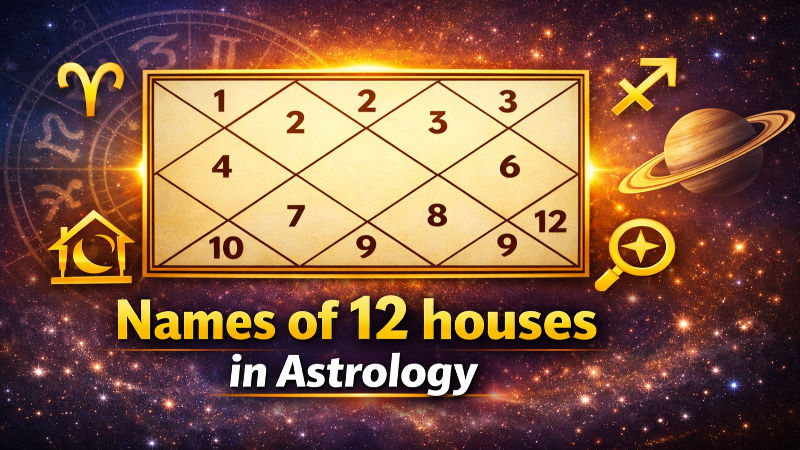
If someone wants the Names of 12 houses in astrology, the classical flow is Tanu, Dhana, Parakrama, Sukha, Putra, Ripu, Yuvati, Ayush, Bhagya, Karma, Labha, and Vyaya.
So, what are the houses of astrology and how are they connected to mankind? They are a map of lived experience. They show where human beings struggle, bond, build, lose, believe, and evolve. If these houses are misunderstood, a chart can feel confusing no matter how many planets are discussed. If they are understood properly, the entire horoscope starts making sense with much greater clarity.
English FAQs
What are the houses of astrology?
The houses of astrology are twelve divisions in a horoscope, and each house represents a specific area of human life. In Vedic astrology, they are used to understand how life unfolds through identity, family, effort, home, children, health, marriage, transformation, belief, career, gains, and liberation.
How are the houses of astrology connected to mankind?
The houses are connected to mankind because they describe lived human experience. They show where a person builds, struggles, relates, learns, works, gains, loses, and evolves throughout life.
What is the difference between signs, planets, and houses in astrology?
A simple way to understand the difference is this: signs show temperament, planets show energy, and houses show where that energy plays out in life. Together, they help explain how a horoscope connects to real events and experiences.
What do the 12 houses in astrology mean?
The 12 houses in astrology represent the major stages and areas of life. They begin with self and body, then move through wealth, courage, home, creativity, challenges, relationships, transformation, fortune, career, gains, and finally loss or liberation.
What is the natural sequence of the 12 houses with signs and lords?
In the natural zodiac model, the first house corresponds with Aries, the second with Taurus, the third with Gemini, and so on until the twelfth house with Pisces. The natural sequence is 1st-Aries-Mars, 2nd-Taurus-Venus, 3rd-Gemini-Mercury, 4th-Cancer-Moon, 5th-Leo-Sun, 6th-Virgo-Mercury, 7th-Libra-Venus, 8th-Scorpio-Mars, 9th-Sagittarius-Jupiter, 10th-Capricorn-Saturn, 11th-Aquarius-Saturn, and 12th-Pisces-Jupiter.
Are the house lords the same in every birth chart?
No, the house lords are not the same in every kundli. In an actual horoscope, the house lord depends on the sign rising in that specific chart, which is why the ascendant or Lagna is so important.
What does the 1st house represent in astrology?
The 1st house, called Tanu Bhava or Lagna, represents self, body, appearance, vitality, confidence, and the way a person meets life. It is linked with identity, initiative, and basic life force.
What does the 2nd house represent in astrology?
The 2nd house, known as Dhana Bhava, represents wealth, food, speech, family values, and stored resources. It also shows how a person builds security and what kind of family imprint shapes early life.
What does the 3rd house represent in astrology?
The 3rd house, or Parakrama Bhava, represents courage, communication, initiative, siblings, skills, and short journeys. It is associated with effort, self-expression, practical action, and the confidence to keep moving forward.
What does the 4th house represent in astrology?
The 4th house, called Sukha Bhava, represents home, mother, emotional peace, roots, property, and inner comfort. It reflects emotional grounding, private happiness, and the need for belonging.
What does the 5th house represent in astrology?
The 5th house, known as Putra Bhava, governs intelligence, children, creativity, love, learning, performance, and merit from past actions. It is connected with self-expression, imagination, romance, and meaningful creation.
What does the 6th house represent in astrology?
The 6th house, called Ripu Bhava, represents disease, debt, conflict, service, discipline, routine, and competition. It shows the daily challenges that help build resilience, problem-solving ability, and practical skill.
What are the names of the 12 houses in astrology?
The classical names of the 12 houses in astrology are Tanu, Dhana, Parakrama, Sukha, Putra, Ripu, Yuvati, Ayush, Bhagya, Karma, Labha, and Vyaya.
Why is understanding the houses important in a horoscope?
Understanding the houses is important because they show where life events and experiences take shape. If the houses are misunderstood, a chart can feel confusing, but when they are understood properly, the entire horoscope becomes much clearer.
Hindi Transcript (हिंदी प्रतिलेख)
ज्योतिष के भाव क्या होते हैं और उनका मानव जीवन से क्या संबंध है
जब लोग पूछते हैं ज्योतिष के भाव क्या होते हैं और उनका मानव जीवन से क्या संबंध है, तो वे वास्तव में एक गहरे प्रश्न का उत्तर ढूँढ रहे होते हैं: जन्म कुंडली मानव जीवन को कैसे दर्शाती है? वैदिक ज्योतिष में कुंडली को ज्योतिष के 12 भावों में विभाजित किया जाता है, और प्रत्येक भाव जीवन के एक विशेष क्षेत्र का प्रतिनिधित्व करता है। यह इतना महत्वपूर्ण क्यों है? क्योंकि मनुष्य केवल व्यक्तित्व या भाग्य के आधार पर जीवन नहीं जीता; जीवन शरीर, परिवार, प्रयास, घर, संतान, स्वास्थ्य, विवाह, संकट, आस्था, कर्म, लाभ और अंततः त्याग के माध्यम से आगे बढ़ता है। यही कारण है कि भावों को केवल चार्ट के हिस्से नहीं माना जाता, बल्कि मानव अनुभव की जीवित संरचना के रूप में देखा जाता है।
भावों को समझने का एक सरल तरीका यह है: राशियाँ स्वभाव दिखाती हैं, ग्रह ऊर्जा दिखाते हैं, और भाव यह बताते हैं कि वह ऊर्जा जीवन के किस क्षेत्र में कार्य करेगी। इसलिए यदि कोई व्यक्ति ज्योतिष के 12 भाव और उनके अर्थ को समझना चाहता है, तो उत्तर केवल पुस्तक की परिभाषाओं तक सीमित नहीं है। भाव यह बताते हैं कि मनुष्य का जीवन जन्म और आत्म-जागरूकता से शुरू होकर वाणी, साहस, सुरक्षा, शिक्षा, संघर्ष, संबंध, परिवर्तन, उद्देश्य, कर्म, उपलब्धि और अंततः आध्यात्मिक मुक्ति तक कैसे विकसित होता है। क्या यही कारण नहीं है कि यह विषय इतना व्यक्तिगत महसूस होता है? जब भावों को वास्तविक जीवन से जोड़ा जाता है, तभी कुंडली वास्तव में अर्थपूर्ण बनती है।
बहुत से लोग यह भी खोजते हैं कि 1 से 12 भाव ज्योतिष में कैसे होते हैं, ज्योतिष के 12 भाव और उनके स्वामी, या 1 से 12 भाव और उनके स्वामी क्या हैं। प्राकृतिक राशि क्रम में पहला भाव मेष से जुड़ा होता है, दूसरा वृषभ से, तीसरा मिथुन से, और इसी प्रकार बारहवाँ भाव मीन राशि से जुड़ता है। इससे एक मूल शिक्षण क्रम बनता है: पहला भाव–मेष–मंगल, दूसरा–वृषभ–शुक्र, तीसरा–मिथुन–बुध, चौथा–कर्क–चंद्रमा, पाँचवाँ–सिंह–सूर्य, छठा–कन्या–बुध, सातवाँ–तुला–शुक्र, आठवाँ–वृश्चिक–मंगल, नौवाँ–धनु–बृहस्पति, दसवाँ–मकर–शनि, ग्यारहवाँ–कुंभ–शनि, बारहवाँ–मीन–बृहस्पति। लेकिन क्या हर कुंडली में यही अंतिम नियम होता है? बिल्कुल नहीं। वास्तविक जन्म कुंडली में भावों के स्वामी उस लग्न राशि पर निर्भर करते हैं जो जन्म के समय उदित होती है, इसलिए लग्न का महत्व बहुत अधिक हो जाता है।
पहला भाव, जिसे तनु भाव या लग्न कहा जाता है, स्वयं का भाव है। यह शरीर, व्यक्तित्व, ऊर्जा, आत्मविश्वास और जीवन के प्रति मूल दृष्टिकोण को दर्शाता है। क्यों दो लोग समान परिस्थितियों में जन्म लेने के बाद भी अलग-अलग तरीके से जीवन जीते हैं? इसका एक उत्तर पहला भाव देता है। यह दिखाता है कि कोई व्यक्ति जीवन की शुरुआत कैसे करता है, वह कैसे प्रतिक्रिया देता है और उसका व्यक्तित्व जीवन को किस प्रकार आकार देता है। प्राकृतिक क्रम में यह मेष और मंगल से जुड़ा है, इसलिए यह पहल, पहचान और जीवन शक्ति का प्रतीक माना जाता है।
दूसरा भाव, जिसे धन भाव कहा जाता है, धन, भोजन, वाणी, परिवार और संचित संसाधनों से जुड़ा होता है। लोग अक्सर मान लेते हैं कि यह केवल पैसे का भाव है, लेकिन क्या धन ही जीवन की सुरक्षा का एकमात्र आधार है? बिल्कुल नहीं। दूसरा भाव यह भी दर्शाता है कि व्यक्ति कैसे बोलता है, उसके मूल्य क्या हैं, वह स्थिरता कैसे बनाता है और परिवार का प्रारंभिक प्रभाव उसके जीवन को कैसे प्रभावित करता है। प्राकृतिक क्रम में यह वृषभ और शुक्र से जुड़ा है, जो स्थिरता, पोषण, संपत्ति और सौंदर्य की ओर संकेत करता है।
तीसरा भाव, जिसे पराक्रम भाव कहा जाता है, साहस, संचार, प्रयास, भाई-बहन, कौशल और छोटी यात्राओं का प्रतिनिधित्व करता है। यही वह स्थान है जहाँ प्रयास दिखाई देता है। क्यों कुछ लोग लगातार प्रयास करते रहते हैं जबकि कुछ लोग जल्दी हार मान लेते हैं? तीसरा भाव इच्छाशक्ति, व्यावहारिक कार्रवाई और स्वयं को व्यक्त करने की क्षमता से जुड़ा है। यह मिथुन और बुध से जुड़ा होता है, इसलिए लेखन, बोलना, नेटवर्किंग, मीडिया, कौशल और सक्रिय प्रयास इस भाव से संबंधित होते हैं।
चौथा भाव, जिसे सुख भाव कहा जाता है, घर, माता, भावनात्मक शांति, जड़ें, संपत्ति और आंतरिक संतोष से जुड़ा होता है। कोई व्यक्ति बाहर से सफल दिख सकता है, लेकिन जब वह अपने भीतर लौटता है तो उसे कैसा महसूस होता है? यह प्रश्न चौथे भाव से जुड़ा है। यह भाव घरेलू जीवन, भावनात्मक सुरक्षा और अपनापन दर्शाता है। प्राकृतिक क्रम में यह कर्क और चंद्रमा से संबंधित है, इसलिए यह पोषण, स्मृति, भावनात्मक स्थिरता और सुरक्षा की भावना से जुड़ा होता है।
पाँचवाँ भाव, जिसे पुत्र भाव कहा जाता है, बुद्धि, संतान, रचनात्मकता, प्रेम, शिक्षा और पूर्व जन्म के पुण्य से संबंधित होता है। इस भाव को इतना विशेष क्यों माना जाता है? क्योंकि यहाँ हृदय और बुद्धि का मेल दिखाई देता है। यह भाव विचारों, कल्पना, प्रेम संबंधों और रचनात्मक अभिव्यक्ति को दर्शाता है। प्राकृतिक रूप से यह सिंह और सूर्य से जुड़ा है, इसलिए इसमें आत्मविश्वास, प्रतिभा, पहचान और व्यक्तिगत चमक के संकेत मिलते हैं।
छठा भाव, जिसे रिपु भाव कहा जाता है, अक्सर चुनौतीपूर्ण माना जाता है, लेकिन यह अत्यंत व्यावहारिक भाव है। यह रोग, ऋण, शत्रु, सेवा, अनुशासन, दिनचर्या और प्रतियोगिता से जुड़ा होता है। मानव विकास अक्सर संघर्ष के माध्यम से क्यों होता है? क्योंकि छठा भाव दैनिक चुनौतियों और समस्याओं का सामना करने की क्षमता को दर्शाता है। यह केवल कठिनाइयों का भाव नहीं है, बल्कि समस्याओं को हल करने, कौशल विकसित करने और जिम्मेदारी निभाने का भाव भी है। प्राकृतिक क्रम में यह कन्या और बुध से जुड़ा है, जो विश्लेषण, सुधार और कार्यकुशलता को दर्शाता है।
सातवाँ भाव, जिसे युवति भाव या कलत्र भाव कहा जाता है, विवाह, साझेदारी, व्यापारिक संबंध और सामाजिक संपर्क का प्रतिनिधित्व करता है। ज्योतिष में विवाह को स्वयं के ठीक सामने क्यों रखा गया है? क्योंकि सातवाँ भाव यह दिखाता है कि किसी व्यक्ति की पहचान संबंधों के माध्यम से कैसे विकसित होती है। यह आकर्षण, समझौता, प्रतिबद्धता और साझेदारी को दर्शाता है। प्राकृतिक क्रम में यह तुला और शुक्र से जुड़ा है, इसलिए संतुलन, आकर्षण और संबंधों की ऊर्जा इस भाव में दिखाई देती है।
आठवाँ भाव, जिसे आयु भाव या रंध्र भाव कहा जाता है, आयु, रहस्य, विरासत, शोध, गुप्त ज्ञान और गहरे परिवर्तन का प्रतिनिधित्व करता है। यह भाव अक्सर गहरा और जटिल क्यों माना जाता है? क्योंकि यह अचानक परिवर्तन, छिपी हुई बातें और जीवन के रहस्यमय पक्ष को दर्शाता है। यह संकट और पुनर्जन्म दोनों से जुड़ा होता है। प्राकृतिक रूप से यह वृश्चिक और मंगल से संबंधित है, जो गहराई, परिवर्तन और शक्ति को दर्शाता है।
नौवाँ भाव, जिसे भाग्य भाव कहा जाता है, धर्म, भाग्य, उच्च ज्ञान, गुरु, दर्शन, आस्था और लंबी यात्राओं से जुड़ा होता है। लोग यह जानना चाहते हैं कि जीवन में आशीर्वाद और मार्गदर्शन कहाँ दिखाई देता है; इसका उत्तर नौवें भाव में मिलता है। यह व्यक्ति की सोच, नैतिक दिशा और आध्यात्मिक दृष्टि को दर्शाता है। प्राकृतिक क्रम में यह धनु और बृहस्पति से जुड़ा है, जो ज्ञान, विस्तार और आध्यात्मिकता का प्रतिनिधित्व करता है।
दसवाँ भाव, जिसे कर्म भाव कहा जाता है, पेशा, प्रतिष्ठा, सामाजिक स्थान, जिम्मेदारी और समाज में योगदान का भाव है। लोग करियर के बारे में सोचते समय सबसे पहले इसी भाव को क्यों देखते हैं? क्योंकि यह दिखाता है कि व्यक्ति समाज में किस भूमिका के लिए जाना जाएगा। यह केवल नौकरी नहीं बल्कि सार्वजनिक कर्म और उपलब्धियों का प्रतिनिधित्व करता है। प्राकृतिक क्रम में यह मकर और शनि से जुड़ा है, जो अनुशासन, जिम्मेदारी और दीर्घकालिक सफलता को दर्शाता है।
ग्यारहवाँ भाव, जिसे लाभ भाव कहा जाता है, आय, इच्छाओं की पूर्ति, मित्रों का सहयोग, बड़े सामाजिक समूह और उपलब्धियों से जुड़ा होता है। क्या सफलता केवल मेहनत से मिलती है, या सही अवसर और नेटवर्क भी महत्वपूर्ण होते हैं? ग्यारहवाँ भाव इस प्रश्न का उत्तर देता है। यह बताता है कि प्रयासों के बाद व्यक्ति को क्या प्राप्त होता है और उसके लक्ष्य किस प्रकार पूरे होते हैं। प्राकृतिक रूप से यह कुंभ और शनि से जुड़ा है, जो सामाजिक संरचना और सामूहिक सहयोग को दर्शाता है।
बारहवाँ भाव, जिसे व्यय भाव कहा जाता है और जिसे अक्सर मोक्ष से जोड़ा जाता है, खर्च, हानि, एकांत, विदेश, नींद, आध्यात्मिकता और त्याग से संबंधित होता है। अंतिम भाव को कठिन और आध्यात्मिक दोनों क्यों माना जाता है? क्योंकि यह अहंकार के विघटन और आंतरिक मुक्ति से जुड़ा होता है। यह हानि या व्यर्थ व्यय को भी दिखा सकता है, लेकिन साथ ही ध्यान, करुणा, आध्यात्मिक अनुभव और आंतरिक शांति की ओर भी संकेत करता है। प्राकृतिक क्रम में यह मीन और बृहस्पति से जुड़ा है।
यदि कोई व्यक्ति ज्योतिष के 12 भावों के नाम जानना चाहता है, तो पारंपरिक क्रम इस प्रकार है: तनु, धन, पराक्रम, सुख, पुत्र, रिपु, युवति, आयु, भाग्य, कर्म, लाभ और व्यय। यदि कोई 1 से 12 भाव ज्योतिष में राशियों के साथ समझना चाहता है, तो प्राकृतिक क्रम मेष, वृषभ, मिथुन, कर्क, सिंह, कन्या, तुला, वृश्चिक, धनु, मकर, कुंभ और मीन होता है। लेकिन इसका वास्तविक महत्व क्या है? केवल नाम याद रखना पर्याप्त नहीं है। असली समझ तब आती है जब यह देखा जाए कि ये बारह भाव मिलकर मानव जीवन की पूरी यात्रा को दर्शाते हैं — शरीर और परिवार से लेकर प्रयास, प्रेम, कर्म, लाभ और अंततः मुक्ति तक।
तो अंततः प्रश्न यही है: ज्योतिष के भाव क्या होते हैं और उनका मानव जीवन से क्या संबंध है? वे मानव जीवन का एक विस्तृत मानचित्र हैं। ये बताते हैं कि व्यक्ति कहाँ संघर्ष करता है, कहाँ संबंध बनाता है, कहाँ निर्माण करता है, कहाँ खोता है और कैसे विकसित होता है। यदि इन भावों को सही ढंग से समझा जाए, तो पूरी जन्म कुंडली बहुत अधिक स्पष्ट हो जाती है। और यदि कोई व्यक्ति केवल ज्योतिष के 12 भाव और उनके स्वामी याद करने के बजाय अपनी कुंडली के गहरे अर्थ को समझना चाहता है, तो सही समय पर उचित मार्गदर्शन लेना कई वर्षों की उलझन से बचा सकता है।
Hindi FAQs
ज्योतिष के भाव क्या होते हैं?
ज्योतिष के भाव कुंडली के बारह विभाजन होते हैं, और प्रत्येक भाव मानव जीवन के एक विशेष क्षेत्र का प्रतिनिधित्व करता है। वैदिक ज्योतिष में इनका उपयोग यह समझने के लिए किया जाता है कि जीवन पहचान, परिवार, प्रयास, घर, संतान, स्वास्थ्य, विवाह, परिवर्तन, आस्था, कर्म, लाभ और मुक्ति के माध्यम से कैसे आगे बढ़ता है।
ज्योतिष के भाव मानव जीवन से कैसे जुड़े होते हैं?
ज्योतिष के भाव मानव जीवन से इसलिए जुड़े होते हैं क्योंकि वे जीवन के वास्तविक अनुभवों को दर्शाते हैं। वे दिखाते हैं कि व्यक्ति जीवन में कहाँ निर्माण करता है, कहाँ संघर्ष करता है, कहाँ संबंध बनाता है, कहाँ सीखता है, कहाँ काम करता है, कहाँ लाभ पाता है, कहाँ हानि उठाता है और कैसे विकसित होता है।
ज्योतिष में राशियों, ग्रहों और भावों में क्या अंतर है?
इसे सरल तरीके से ऐसे समझा जा सकता है: राशियाँ स्वभाव दिखाती हैं, ग्रह ऊर्जा दिखाते हैं, और भाव यह बताते हैं कि वह ऊर्जा जीवन के किस क्षेत्र में कार्य करेगी। ये तीनों मिलकर यह समझने में मदद करते हैं कि कुंडली वास्तविक घटनाओं और अनुभवों से कैसे जुड़ती है।
ज्योतिष के 12 भाव क्या दर्शाते हैं?
ज्योतिष के 12 भाव जीवन के प्रमुख चरणों और क्षेत्रों का प्रतिनिधित्व करते हैं। ये स्वयं और शरीर से शुरू होकर धन, साहस, घर, रचनात्मकता, चुनौतियाँ, संबंध, परिवर्तन, भाग्य, कर्म, लाभ और अंत में हानि या मुक्ति तक जाते हैं।
12 भावों का प्राकृतिक क्रम राशियों और स्वामियों के साथ क्या है?
प्राकृतिक राशि क्रम में पहला भाव मेष से, दूसरा वृषभ से, तीसरा मिथुन से, और इसी प्रकार बारहवाँ भाव मीन से जुड़ा होता है। इसका प्राकृतिक क्रम इस प्रकार है: पहला–मेष–मंगल, दूसरा–वृषभ–शुक्र, तीसरा–मिथुन–बुध, चौथा–कर्क–चंद्रमा, पाँचवाँ–सिंह–सूर्य, छठा–कन्या–बुध, सातवाँ–तुला–शुक्र, आठवाँ–वृश्चिक–मंगल, नौवाँ–धनु–बृहस्पति, दसवाँ–मकर–शनि, ग्यारहवाँ–कुंभ–शनि, और बारहवाँ–मीन–बृहस्पति।
क्या हर जन्म कुंडली में भावों के स्वामी एक जैसे होते हैं?
नहीं, हर कुंडली में भावों के स्वामी एक जैसे नहीं होते। वास्तविक जन्म कुंडली में भाव का स्वामी उस लग्न राशि पर निर्भर करता है जो उस विशेष चार्ट में उदित हो रही होती है, इसलिए लग्न का महत्व बहुत अधिक होता है।
ज्योतिष में पहला भाव क्या दर्शाता है?
पहला भाव, जिसे तनु भाव या लग्न कहा जाता है, स्वयं, शरीर, व्यक्तित्व, ऊर्जा, आत्मविश्वास और जीवन का सामना करने के तरीके को दर्शाता है। यह पहचान, पहल और मूल जीवन शक्ति से जुड़ा होता है।
ज्योतिष में दूसरा भाव क्या दर्शाता है?
दूसरा भाव, जिसे धन भाव कहा जाता है, धन, भोजन, वाणी, पारिवारिक मूल्य और संचित संसाधनों को दर्शाता है। यह यह भी बताता है कि व्यक्ति सुरक्षा कैसे बनाता है और प्रारंभिक पारिवारिक प्रभाव उसके जीवन को कैसे आकार देते हैं।
ज्योतिष में तीसरा भाव क्या दर्शाता है?
तीसरा भाव, या पराक्रम भाव, साहस, संचार, पहल, भाई-बहन, कौशल और छोटी यात्राओं का प्रतिनिधित्व करता है। यह प्रयास, आत्म-अभिव्यक्ति, व्यावहारिक कार्य और आगे बढ़ते रहने के आत्मविश्वास से जुड़ा होता है।
ज्योतिष में चौथा भाव क्या दर्शाता है?
चौथा भाव, जिसे सुख भाव कहा जाता है, घर, माता, भावनात्मक शांति, जड़ें, संपत्ति और आंतरिक सुख को दर्शाता है। यह भावनात्मक आधार, निजी सुख और अपनापन की आवश्यकता को प्रकट करता है।
ज्योतिष में पाँचवाँ भाव क्या दर्शाता है?
पाँचवाँ भाव, जिसे पुत्र भाव कहा जाता है, बुद्धि, संतान, रचनात्मकता, प्रेम, शिक्षा, प्रदर्शन और पूर्व कर्मों के पुण्य को दर्शाता है। यह आत्म-अभिव्यक्ति, कल्पना, प्रेम और सार्थक सृजन से जुड़ा होता है।
ज्योतिष में छठा भाव क्या दर्शाता है?
छठा भाव, जिसे रिपु भाव कहा जाता है, रोग, ऋण, संघर्ष, सेवा, अनुशासन, दिनचर्या और प्रतियोगिता का प्रतिनिधित्व करता है। यह दैनिक चुनौतियों को दिखाता है जो सहनशक्ति, समस्या-समाधान की क्षमता और व्यावहारिक कौशल का निर्माण करती हैं।
ज्योतिष में 12 भावों के नाम क्या हैं?
ज्योतिष के 12 भावों के पारंपरिक नाम हैं: तनु, धन, पराक्रम, सुख, पुत्र, रिपु, युवति, आयुष, भाग्य, कर्म, लाभ और व्यय।
कुंडली में भावों को समझना क्यों महत्वपूर्ण है?
भावों को समझना इसलिए महत्वपूर्ण है क्योंकि वे दिखाते हैं कि जीवन की घटनाएँ और अनुभव किस क्षेत्र में आकार लेते हैं। यदि भावों को सही तरह से न समझा जाए तो कुंडली उलझी हुई लग सकती है, लेकिन जब इन्हें सही ढंग से समझा जाता है तो पूरी कुंडली अधिक स्पष्ट हो जाती है।