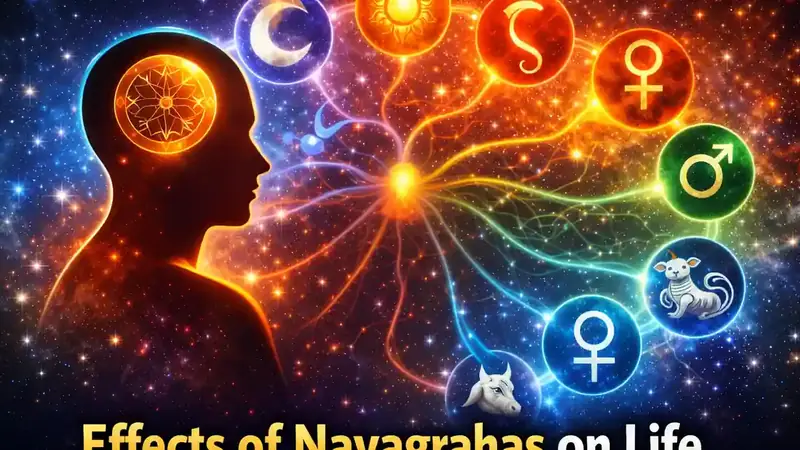
Navagraha Effects on Humans: What They Really Mean in Real Life
Navagraha effects on humans are understood in Vedic astrology as the influence of the nine grahas on temperament, choices, health patterns, relationships, timing, and life lessons. The important part is this: they do not work one by one in isolation. Their results depend on placement, strength, combinations, and timing in the full chart.
Many people look for this when life starts feeling uneven. A relationship becomes confusing, work keeps getting delayed, the mind stays restless, or the same problem repeats even after effort. General information can help, but it often does not explain why one person recovers quickly while another stays stuck.
This question usually comes up when someone is trying to understand whether planets can affect human behavior, decisions, emotions, or even the body. At first glance that sounds simple. In practice, the real answer depends on the full kundli, not just one planet or one transit.
If you are worried about marriage, career timing, health stress, or repeated emotional confusion, this topic matters because broad online meanings can easily be misunderstood. One factor alone should never be the basis of a final conclusion.
What navagraha effects on humans usually mean
In Vedic astrology, the nine grahas are Surya, Chandra, Mangal, Budha, Guru, Shukra, Shani, Rahu, and Ketu. They are treated as forces that shape the quality of experience in life, including confidence, emotions, action, communication, judgment, love, discipline, desire, and detachment. The word graha itself carries the idea of something that “takes hold,” which is why these influences are understood as deeply personal rather than abstract.
In real life, this means the Sun is often read through confidence, authority, vitality, and self-respect. The Moon is read through emotional stability, comfort, intuition, and mental balance. Mars shows up in courage, anger, drive, and conflict handling. Mercury relates to speech, analysis, adaptability, and decision-making. Jupiter points toward wisdom, ethics, growth, and judgment. Venus affects attraction, pleasure, values, and relationship harmony. Saturn brings duty, delay, endurance, structure, and consequences. Rahu magnifies desire, confusion, ambition, and unusual obsessions, while Ketu often shows detachment, spiritual pull, and dissatisfaction with surface-level success.
This is where many people go wrong. They read one line like “Saturn causes delay” or “Rahu causes confusion” and apply it directly to their life. But the same combination does not work the same way for everyone. A planet can create pressure in one chart, maturity in another, and success after struggle in a third. Exact outcomes depend on the full chart, current dasha, house involvement, and overall planetary support.
Can planets affect human behavior?
Within the Vedic astrology framework, yes, planets are believed to affect human behavior. But not in a simplistic, mechanical way. They are understood more as pattern-makers than puppet-masters. They can influence how someone reacts to authority, handles fear, expresses anger, seeks love, thinks under pressure, or responds to uncertainty.
For example, a disturbed Moon is often discussed in relation to emotional instability, overthinking, or lack of inner peace. A tense Mars can show up as irritation, impulsive choices, or conflict. A pressured Mercury may affect clarity, speech, or consistent judgment. A heavy Saturn period may feel like isolation, delay, or emotional heaviness. Rahu can intensify craving, distraction, or compulsive thinking, while Ketu can create withdrawal, detachment, or confusion about direction.
That is why general interpretations can only go so far without checking the full planetary combinations. If a situation is emotionally important, a personalized reading is more useful than broad online meanings.
Planets and their effects on human body
When people ask about planets and their effects on human body, they are usually asking whether each graha is linked with specific physical systems. Traditional medical-astrology style interpretations do make those associations. The Sun is commonly tied to vitality, heart, and spine; the Moon to the mind, fluids, and stomach; Mars to blood and muscles; Mercury to the nervous system and hands; Jupiter to liver and growth; Venus to kidneys, skin, and reproductive balance; Saturn to bones and teeth; Rahu and Ketu to subtler or harder-to-define shadow patterns.
This does not mean every health issue should be reduced to one planet. That would be a mistake. It simply means astrology looks for symbolic links between body patterns and planetary conditions. In sensitive matters, especially health, broad online interpretations should never be treated as final answers. A general rule may not tell the full story.

Navagraha positions and directions
Navagraha positions and directions are often discussed in temple layouts and symbolic worship. In many traditional arrangements, Surya is placed at the center, with the other grahas around him. One documented temple layout places Chandra in the east, Budha in the south, Brihaspati in the west, Shukra in the north, Mangala in the southeast, Shani in the southwest, Rahu in the northwest, and Ketu in the northeast. Traditional altars also place the grahas so they do not face each other directly.
For most readers, the practical value of this is symbolic. It shows that Navagraha worship is structured, not random. But these directions alone do not predict your life. They are part of ritual and tradition, not a shortcut to chart interpretation.
Which God controls all Navagraha?
When people ask, “Which god controls all Navagraha?” the most common traditional answer is Lord Shiva. In many Hindu traditions, Shiva is revered as Navagraheshwara, the one who governs or transcends the nine grahas. At the same time, each graha is also linked with its own associated deity or devotional path, such as Surya for the Sun, Shiva for the Moon, Hanuman for Mars, Vishnu for Mercury, Lakshmi for Venus, and Ganesha for Ketu.
That is why the question “Which God controls Navagraha?” has both a broad and a specific answer. Broadly, many traditions point to Shiva. More specifically, different grahas are also approached through their own deity associations and remedies.
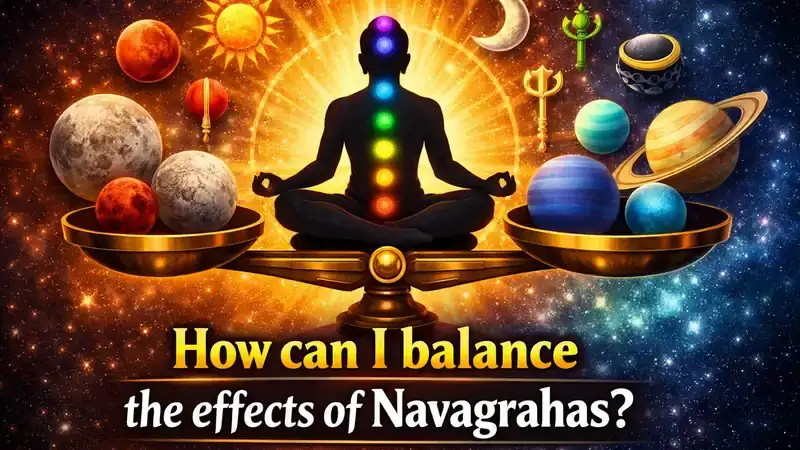
How can I balance the effects of Navagrahas?
How can I balance the effects of Navagrahas? The first step is not fear. It is clarity. Most traditional guidance focuses on discipline, prayer, mantra, charity, fasting, right conduct, and remedies suited to the actual condition of the chart. Even simple practices are often linked to the nature of the graha: discipline for Saturn, emotional steadiness for Moon, conscious communication for Mercury, humility and learning for Jupiter, moderation for Venus, and grounded action for Mars.
This is also why copying random remedies from the internet is risky. A gemstone, ritual, or mantra that suits one chart may not suit another. Surface-level matching or broad rules often miss the deeper picture. This can vary from chart to chart. Exact timing or outcome needs deeper chart analysis.
A more practical way to think about remedies is this: they should support awareness, discipline, and correction, not replace responsibility. If a person is dealing with marriage stress, career blocks, financial fear, or mental restlessness, the remedy should be connected to the real planetary pattern behind that issue. Otherwise, the effort may feel spiritual, but remain unfocused.
When general information is enough, and when it is not
General information is useful when you want a basic understanding of what the nine grahas represent. It helps you see why certain life themes repeat, why some periods feel heavy, and why certain habits make a difference. It can also help you stop blaming one planet for everything.
But general information is not enough when the matter is serious. Marriage decisions, health anxiety, recurring family conflict, business risks, foreign settlement, legal trouble, or long delays in career are not areas where one should depend only on broad meanings. One factor alone should never be the basis of a final conclusion. This is especially important when the decision affects marriage, career, health, or finances.
Why personalized analysis matters
If you want clarity on your exact situation, a personalized kundli analysis can help identify which grahas are active, which combinations are actually responsible, what timing is running, and which remedies are truly relevant. That is usually far more useful than trying to apply one generic interpretation to a deeply personal life question.
Navagraha effects on humans are important because they are not just about planets in theory. They are about how patterns play out in real life through thought, emotion, health, relationships, and timing. General knowledge can give direction, but exact clarity comes only from chart-specific analysis. When the issue matters personally, it deserves more than a broad answer.
FAQs
What are navagraha effects on humans?
Navagraha effects on humans refer to how the nine planets influence a person’s behavior, decisions, health patterns, relationships, and life experiences. These effects depend on the full birth chart, not just one planet.
Can planets affect human behavior?
Yes, in Vedic astrology, planets are believed to influence human behavior by shaping emotional responses, thinking patterns, reactions, and decision-making tendencies. However, this varies from chart to chart.
How do planets affect the human body?
Each planet is traditionally associated with certain parts of the body and functions. For example, the Sun relates to vitality, the Moon to the mind, and Saturn to bones. These are symbolic links and should not be interpreted in isolation.
Why do the same planets affect people differently?
The same planet can produce different results depending on its position, strength, house placement, combinations with other planets, and the running time period (dasha). One factor alone does not determine the outcome.
Which God controls all Navagraha?
In many traditions, Lord Shiva is considered the controller of all Navagrahas. At the same time, each planet is also associated with specific deities and devotional practices.
What are Navagraha positions and directions?
Navagraha positions and directions are traditionally used in temple layouts and symbolic worship. These placements are spiritual in nature and are not direct tools for predicting personal life events.
How can I balance the effects of Navagrahas?
Balancing Navagraha effects usually involves discipline, prayer, mantra, charity, and lifestyle corrections. However, remedies should be based on the individual chart rather than general advice.
Are general astrology interpretations enough to understand Navagraha effects?
General interpretations can provide basic understanding, but they are not enough for important life decisions. Accurate insights require a detailed analysis of the full kundli.
When should I consider a personalized astrology analysis?
A personalized analysis becomes important when dealing with serious matters like marriage, career delays, health concerns, financial issues, or recurring life patterns that are difficult to understand.
Can one planet alone decide my life outcome?
No, one planet alone cannot decide your life outcome. Results always depend on multiple planetary combinations, timing, and the overall structure of the birth chart.
Hindi Transcript (हिंदी प्रतिलेख)
नवग्रहों का मनुष्यों पर प्रभाव: वास्तविक जीवन में इसका क्या अर्थ है
नवग्रहों का मनुष्यों पर प्रभाव वैदिक ज्योतिष में नौ ग्रहों के प्रभाव के रूप में समझा जाता है, जो स्वभाव, निर्णय, स्वास्थ्य के पैटर्न, रिश्तों, समय और जीवन के अनुभवों को प्रभावित करते हैं। सबसे महत्वपूर्ण बात यह है कि ये ग्रह अलग-अलग काम नहीं करते। इनके परिणाम पूरे कुंडली में उनकी स्थिति, शक्ति, संयोजन और समय पर निर्भर करते हैं।
कई लोग इस विषय को तब खोजते हैं जब जीवन असंतुलित महसूस होने लगता है। रिश्ते उलझने लगते हैं, काम में देरी होती रहती है, मन अशांत रहता है या एक ही समस्या बार-बार दोहराई जाती है। सामान्य जानकारी कुछ हद तक मदद कर सकती है, लेकिन यह अक्सर यह नहीं समझाती कि एक व्यक्ति जल्दी संभल जाता है जबकि दूसरा लंबे समय तक संघर्ष करता रहता है।
यह सवाल आमतौर पर तब उठता है जब कोई यह समझना चाहता है कि क्या ग्रह मानव व्यवहार, निर्णय, भावनाओं या शरीर को प्रभावित कर सकते हैं। पहली नजर में यह सरल लगता है। लेकिन वास्तविक उत्तर पूरी कुंडली पर निर्भर करता है, केवल एक ग्रह या एक गोचर पर नहीं।
यदि आप विवाह, करियर के समय, स्वास्थ्य या बार-बार होने वाली भावनात्मक उलझनों को लेकर चिंतित हैं, तो यह विषय महत्वपूर्ण हो जाता है क्योंकि सामान्य ऑनलाइन जानकारी को आसानी से गलत समझा जा सकता है। केवल एक कारक के आधार पर कोई अंतिम निष्कर्ष नहीं निकाला जाना चाहिए।
नवग्रहों का मनुष्यों पर प्रभाव वास्तव में क्या होता है
वैदिक ज्योतिष में नौ ग्रह हैं – सूर्य, चंद्र, मंगल, बुध, गुरु, शुक्र, शनि, राहु और केतु। इन्हें ऐसे कारकों के रूप में देखा जाता है जो जीवन के अनुभव की गुणवत्ता को प्रभावित करते हैं, जैसे आत्मविश्वास, भावनाएं, कार्य, संचार, निर्णय, प्रेम, अनुशासन, इच्छाएं और वैराग्य। "ग्रह" शब्द का अर्थ ही ऐसा है जो "पकड़ लेता है", इसलिए इनका प्रभाव व्यक्तिगत और गहरा माना जाता है।
व्यावहारिक जीवन में इसका मतलब है कि सूर्य आत्मविश्वास, अधिकार और ऊर्जा से जुड़ा होता है। चंद्रमा भावनाओं, मानसिक संतुलन और आराम से जुड़ा होता है। मंगल साहस, गुस्सा और कार्यशक्ति को दर्शाता है। बुध संचार, विश्लेषण और निर्णय क्षमता से संबंधित होता है। गुरु ज्ञान, नैतिकता और विकास का संकेत देता है। शुक्र आकर्षण, संबंध और सुख से जुड़ा होता है। शनि जिम्मेदारी, देरी और धैर्य लाता है। राहु इच्छाओं और भ्रम को बढ़ाता है, जबकि केतु वैराग्य और असंतोष दिखाता है।
यहीं पर अधिकतर लोग गलती करते हैं। वे एक लाइन पढ़ लेते हैं जैसे "शनि देरी देता है" या "राहु भ्रम देता है" और उसे सीधे अपने जीवन पर लागू कर लेते हैं। लेकिन एक ही संयोजन हर व्यक्ति के लिए समान परिणाम नहीं देता। कोई ग्रह एक कुंडली में दबाव बना सकता है, दूसरी में परिपक्वता और तीसरी में संघर्ष के बाद सफलता। सटीक परिणाम पूरी कुंडली, दशा और ग्रहों के आपसी संबंधों पर निर्भर करते हैं।
क्या ग्रह मानव व्यवहार को प्रभावित कर सकते हैं?
वैदिक ज्योतिष के अनुसार, हां, ग्रह मानव व्यवहार को प्रभावित कर सकते हैं। लेकिन यह प्रभाव सीधा और यांत्रिक नहीं होता। इन्हें ऐसे पैटर्न के रूप में समझा जाता है जो यह तय करते हैं कि व्यक्ति कैसे प्रतिक्रिया करता है, डर को कैसे संभालता है, गुस्सा कैसे व्यक्त करता है, प्रेम कैसे खोजता है और निर्णय कैसे लेता है।
उदाहरण के लिए, कमजोर चंद्रमा भावनात्मक अस्थिरता या अधिक सोचने की प्रवृत्ति दिखा सकता है। तनावपूर्ण मंगल चिड़चिड़ापन या जल्दबाजी में निर्णय को दिखा सकता है। कमजोर बुध स्पष्ट सोच और संचार को प्रभावित कर सकता है। शनि का भारी प्रभाव देरी और अकेलेपन का अनुभव करा सकता है। राहु अत्यधिक इच्छाएं और भ्रम पैदा कर सकता है, जबकि केतु दिशा की कमी और अलगाव दिखा सकता है।
इसलिए केवल सामान्य व्याख्याएं पर्याप्त नहीं होतीं। यदि स्थिति महत्वपूर्ण है, तो व्यक्तिगत कुंडली विश्लेषण अधिक उपयोगी होता है।
ग्रहों का मानव शरीर पर प्रभाव
जब लोग पूछते हैं कि ग्रहों का शरीर पर क्या प्रभाव होता है, तो वे जानना चाहते हैं कि क्या प्रत्येक ग्रह शरीर के किसी हिस्से से जुड़ा होता है। पारंपरिक ज्योतिष में ऐसे संबंध बताए गए हैं। सूर्य ऊर्जा और हृदय से जुड़ा है, चंद्रमा मन और तरल पदार्थों से, मंगल रक्त और मांसपेशियों से, बुध तंत्रिका तंत्र से, गुरु विकास और यकृत से, शुक्र त्वचा और प्रजनन से, शनि हड्डियों से, और राहु-केतु सूक्ष्म प्रभावों से जुड़े माने जाते हैं।
इसका मतलब यह नहीं है कि हर स्वास्थ्य समस्या को एक ग्रह से जोड़ा जाए। यह एक बड़ी गलती होगी। इसका अर्थ केवल यह है कि ज्योतिष शरीर और ग्रहों के बीच प्रतीकात्मक संबंध देखता है। खासकर स्वास्थ्य के मामलों में सामान्य जानकारी को अंतिम सत्य नहीं मानना चाहिए।
नवग्रहों की स्थिति और दिशाएं
नवग्रहों की स्थिति और दिशाओं का उल्लेख अक्सर मंदिरों और पूजा पद्धतियों में मिलता है। पारंपरिक व्यवस्था में सूर्य को केंद्र में रखा जाता है और बाकी ग्रह उसके चारों ओर होते हैं। चंद्र पूर्व में, बुध दक्षिण में, गुरु पश्चिम में, शुक्र उत्तर में, मंगल दक्षिण-पूर्व में, शनि दक्षिण-पश्चिम में, राहु उत्तर-पश्चिम में और केतु उत्तर-पूर्व में माना जाता है।
व्यावहारिक रूप से यह अधिक प्रतीकात्मक महत्व रखता है। यह दर्शाता है कि नवग्रह पूजा व्यवस्थित है, लेकिन यह सीधे जीवन की भविष्यवाणी नहीं करता।
नवग्रहों को नियंत्रित करने वाला देवता कौन है?
जब लोग पूछते हैं कि नवग्रहों को कौन नियंत्रित करता है, तो पारंपरिक उत्तर भगवान शिव होता है। कई मान्यताओं में शिव को नवग्रहों के अधिपति के रूप में माना जाता है। साथ ही, प्रत्येक ग्रह का अपना संबंधित देवता भी होता है, जैसे सूर्य, शिव, हनुमान, विष्णु, लक्ष्मी और गणेश आदि।
इसलिए इस प्रश्न का उत्तर व्यापक और विशिष्ट दोनों है।
नवग्रहों के प्रभाव को कैसे संतुलित करें?
नवग्रहों के प्रभाव को संतुलित करने का पहला कदम डर नहीं बल्कि समझ है। पारंपरिक उपायों में अनुशासन, पूजा, मंत्र, दान और सही आचरण शामिल होते हैं।
लेकिन बिना समझ के उपाय करना जोखिम भरा हो सकता है। एक उपाय जो एक व्यक्ति के लिए सही है, वह दूसरे के लिए उपयुक्त नहीं हो सकता। यही कारण है कि केवल सामान्य नियमों पर भरोसा करना सही नहीं होता।
उपायों को हमेशा व्यक्ति की वास्तविक स्थिति के अनुसार होना चाहिए।
कब सामान्य जानकारी पर्याप्त है और कब नहीं
सामान्य जानकारी तब उपयोगी होती है जब आप केवल मूल समझ प्राप्त करना चाहते हैं। लेकिन जब बात महत्वपूर्ण हो, जैसे विवाह, करियर, स्वास्थ्य या वित्त, तब केवल सामान्य जानकारी पर निर्भर नहीं रहना चाहिए।
व्यक्तिगत विश्लेषण क्यों महत्वपूर्ण है
यदि आप अपनी स्थिति को स्पष्ट रूप से समझना चाहते हैं, तो व्यक्तिगत कुंडली विश्लेषण यह बता सकता है कि कौन से ग्रह सक्रिय हैं, कौन से संयोजन काम कर रहे हैं और कौन से उपाय वास्तव में उपयोगी हैं।
नवग्रहों का प्रभाव केवल सैद्धांतिक नहीं है, बल्कि यह जीवन के अनुभवों में दिखता है। सामान्य जानकारी दिशा दे सकती है, लेकिन सटीक स्पष्टता केवल व्यक्तिगत विश्लेषण से ही मिलती है।
Hindi FAQs
नवग्रहों का मनुष्यों पर प्रभाव क्या होता है?
नवग्रहों का मनुष्यों पर प्रभाव यह दर्शाता है कि नौ ग्रह किसी व्यक्ति के व्यवहार, निर्णय, स्वास्थ्य, रिश्तों और जीवन के अनुभवों को कैसे प्रभावित करते हैं। यह प्रभाव पूरी कुंडली पर निर्भर करता है, केवल एक ग्रह पर नहीं।
क्या ग्रह मानव व्यवहार को प्रभावित कर सकते हैं?
हाँ, वैदिक ज्योतिष के अनुसार ग्रह मानव व्यवहार को प्रभावित कर सकते हैं। वे भावनात्मक प्रतिक्रिया, सोचने का तरीका और निर्णय लेने की प्रवृत्ति को प्रभावित करते हैं। लेकिन यह हर कुंडली में अलग-अलग होता है।
ग्रह मानव शरीर को कैसे प्रभावित करते हैं?
प्रत्येक ग्रह को पारंपरिक रूप से शरीर के कुछ हिस्सों और कार्यों से जोड़ा जाता है। जैसे सूर्य ऊर्जा से, चंद्रमा मन से और शनि हड्डियों से जुड़ा माना जाता है। ये प्रतीकात्मक संबंध हैं और इन्हें अकेले नहीं समझना चाहिए।
एक ही ग्रह अलग-अलग लोगों पर अलग प्रभाव क्यों डालता है?
एक ही ग्रह अलग-अलग परिणाम देता है क्योंकि उसकी स्थिति, शक्ति, भाव में स्थान, अन्य ग्रहों के साथ संयोजन और चल रही दशा के अनुसार प्रभाव बदलता है। केवल एक कारक परिणाम तय नहीं करता।
नवग्रहों को नियंत्रित करने वाला देवता कौन है?
कई परंपराओं में भगवान शिव को सभी नवग्रहों का नियंत्रक माना जाता है। साथ ही, प्रत्येक ग्रह का अपना संबंधित देवता और पूजा पद्धति भी होती है।
नवग्रहों की स्थिति और दिशाएं क्या होती हैं?
नवग्रहों की स्थिति और दिशाएं मंदिरों और पूजा व्यवस्था में उपयोग की जाती हैं। ये अधिकतर प्रतीकात्मक होती हैं और सीधे जीवन की भविष्यवाणी के लिए उपयोग नहीं होतीं।
नवग्रहों के प्रभाव को कैसे संतुलित किया जा सकता है?
नवग्रहों के प्रभाव को संतुलित करने के लिए अनुशासन, पूजा, मंत्र, दान और जीवनशैली में सुधार जैसे उपाय किए जाते हैं। लेकिन उपाय हमेशा व्यक्तिगत कुंडली के अनुसार होने चाहिए।
क्या सामान्य ज्योतिष जानकारी नवग्रहों के प्रभाव को समझने के लिए पर्याप्त है?
सामान्य जानकारी बुनियादी समझ देने में मदद करती है, लेकिन महत्वपूर्ण जीवन निर्णयों के लिए यह पर्याप्त नहीं होती। सटीक जानकारी के लिए पूरी कुंडली का विश्लेषण आवश्यक होता है।
मुझे व्यक्तिगत ज्योतिष विश्लेषण कब करवाना चाहिए?
जब बात विवाह, करियर में देरी, स्वास्थ्य, वित्त या बार-बार आने वाली समस्याओं की हो, तब व्यक्तिगत विश्लेषण करवाना अधिक उपयोगी होता है।
क्या एक ग्रह अकेले मेरे जीवन का परिणाम तय कर सकता है?
नहीं, एक ग्रह अकेले जीवन का परिणाम तय नहीं करता। परिणाम हमेशा कई ग्रहों के संयोजन, समय और पूरी कुंडली पर निर्भर करते हैं।