
Importance of Marriage in Modern Times: Why It Still Matters
Marriage still has importance in modern times, but its meaning is no longer limited to social duty, tradition or family expectation. For many people today, marriage is a voluntary partnership built around companionship, emotional support, shared responsibility and long-term commitment.
A healthy marriage can give two people a stable framework for building a life together. It can help them face financial decisions, career changes, family responsibilities, illness, ageing and other major stages of life as partners rather than as individuals carrying everything alone.
However, marriage does not automatically create happiness, security or compatibility. Its value depends on the quality of the relationship, the maturity of both partners and their willingness to communicate, adapt and respect each other.
Marriage is also not the only path to a meaningful life. Remaining unmarried can be a valid personal choice. The importance of marriage should therefore be understood through the quality of the partnership, not through pressure to marry at any cost.
Is Marriage Still Important in Modern Times?
Marriage remains important because the human need for trust, companionship and emotional connection has not disappeared. What has changed is the way people expect these needs to be fulfilled within a marriage.
Earlier generations often treated marriage mainly as a family arrangement, social responsibility or economic necessity. Modern couples are more likely to expect emotional compatibility, mutual respect, equality and personal understanding in addition to practical stability.
This change has made marriage more demanding in some ways. A couple is no longer expected merely to remain together. They are expected to communicate, support each other’s ambitions, share responsibilities and create a relationship in which both individuals can grow.
Marriage can therefore remain deeply meaningful, but only when it develops beyond ceremony and social status into a functioning partnership.
How the Meaning of Marriage Has Changed
Traditional marriage structures often assigned fixed roles to husbands and wives. One partner was commonly expected to earn, while the other managed the home and family. Decisions could also be influenced heavily by relatives, community expectations and established customs.
Modern marriages are generally more flexible. Couples may both work, divide household duties, contribute financially and participate equally in major decisions. Their roles may change according to circumstances rather than remain permanently fixed.
People also expect greater personal choice in deciding whether to marry, whom to marry and when to marry. Emotional compatibility and shared values have become more important alongside family background, education and financial stability.
This does not mean that tradition has lost all value. Family support, cultural continuity and shared customs can still strengthen a marriage. The challenge is to preserve what is helpful without allowing tradition to suppress personal dignity, consent or healthy boundaries.

Companionship and Emotional Support
One of the most important benefits of marriage in modern times is companionship. A dependable partner can provide emotional reassurance during uncertainty, disappointment and major life transitions.
This support does not mean that spouses must solve every problem for each other. It means creating a relationship in which both people can speak honestly, feel heard and trust that they will not be dismissed when life becomes difficult.
Companionship is also present in ordinary daily life. Sharing routines, celebrating achievements, discussing concerns and planning the future can create a sense of continuity and belonging.
At the same time, a spouse should not be expected to fulfil every emotional need. Friendships, family relationships, personal interests and individual space remain important. A healthy marriage adds to a person’s life rather than replacing every other connection.
Shared Responsibility and Life Planning
Modern life involves many practical responsibilities. Housing, employment, finances, healthcare, family care and long-term security can become easier to manage when two committed people plan together.
In a healthy marriage, responsibility is not imposed on one partner simply because of gender or tradition. Both people discuss what needs to be done and decide how duties can be shared fairly.
Fairness does not always mean dividing every task equally. One partner may carry more responsibility during a period when the other is studying, recovering from illness, caring for a relative or facing professional pressure. The balance may change over time.
What matters is that the arrangement is understood, respected and not taken for granted. Resentment often grows when one person repeatedly carries an invisible burden while the other assumes that everything is being managed automatically.
Financial planning is another important part of marriage. Couples need clarity about income, spending habits, savings, debt, family obligations and future priorities. Avoiding these discussions may create confusion later, even when the relationship is emotionally strong.
Marriage, Family and Social Connection
Marriage often creates a connection between two families as well as between two individuals. This wider network can provide emotional, practical and cultural support.
Family members may assist during illness, childcare, relocation, financial difficulty or other demanding periods. Shared celebrations and traditions can also create a stronger sense of continuity.
However, family involvement is beneficial only when appropriate boundaries are respected. Constant interference, comparison or pressure can weaken the couple’s ability to make independent decisions.
A modern marriage needs enough space for the couple to establish its own priorities. Respecting parents and relatives does not mean allowing every private decision to be controlled by them.
The healthiest arrangement is usually one in which both partners remain connected to their families while protecting the privacy, dignity and independence of their marriage.

Marriage and Raising Children
Some couples consider marriage important because they want to raise children within a stable family structure. A committed partnership can help parents share caregiving, financial responsibility and important decisions.
Children may benefit when the adults caring for them provide consistency, respect and emotional safety. However, marriage alone does not guarantee such an environment.
A household filled with unresolved conflict, fear or hostility does not become healthy simply because the parents remain legally married. The behaviour of the adults matters more than the label attached to the relationship.
It is also important not to define every marriage through parenthood. Some couples choose not to have children, while others may be unable to do so. Their marriage can still have meaning through companionship, shared purpose and commitment.
Why Marriage Does Not Automatically Create Happiness
Marriage is sometimes presented as the solution to loneliness, insecurity, family pressure or personal dissatisfaction. These expectations can become harmful when people assume that the ceremony itself will transform their lives.
Marriage does not automatically correct poor communication, emotional immaturity, financial irresponsibility or incompatible values. Problems that are ignored before marriage may become more visible afterwards.
Similarly, a person should not enter marriage only because of age, social comparison or fear of being left behind. A rushed decision may satisfy immediate pressure while creating more serious difficulties later.
A strong marriage requires ongoing effort. Both partners need to learn how to disagree without humiliation, express needs without manipulation and accept responsibility when they make mistakes.
The importance of marriage should therefore never be used to justify remaining in a relationship that is abusive, coercive or unsafe. Personal safety and dignity must take priority over social appearances.
What Makes a Modern Marriage Healthy?
A healthy modern marriage is not one without disagreement. It is one in which disagreement can be handled without destroying trust and respect.
Clear Communication
Partners should be able to discuss uncomfortable subjects, including money, relatives, intimacy, careers, household duties and future plans. Avoiding every difficult conversation may create temporary peace but often increases long-term misunderstanding.
Mutual Respect
Respect means recognising that both people have valid needs, boundaries and ambitions. Insults, public humiliation, constant criticism and controlling behaviour weaken the foundation of the relationship.
Trust and Honesty
Trust develops through consistent actions. Concealing important financial, emotional or personal information can damage a marriage even when no single incident appears serious on its own.
Shared Responsibility
Both partners should contribute to the relationship in meaningful ways. One person should not be expected to carry the complete emotional, financial or domestic burden indefinitely.
Healthy Boundaries
A couple needs boundaries around privacy, extended family involvement, friendships, work and personal time. Boundaries are not rejection; they help prevent resentment and confusion.
Adaptability
Circumstances change. Careers shift, parents age, financial conditions fluctuate and health needs develop. A successful marriage requires partners to adjust together rather than insist that life must always follow the original plan.
Individual Growth
Marriage should not require either person to abandon every personal goal. Supporting education, professional development, interests and friendships can strengthen the partnership by allowing both people to remain emotionally fulfilled.
Is Love Alone Enough for Marriage?
Love is important, but love alone is not always enough to sustain a marriage.
Two people may care deeply for each other and still disagree about finances, children, family involvement, religion, careers, lifestyle or where they want to live. These differences do not automatically make marriage impossible, but they need honest discussion.
Attraction can bring people together, while maturity helps them remain together responsibly. Long-term partnership requires patience, reliability, emotional regulation and the ability to make decisions as a team.
Compatibility does not mean that both partners must think and behave identically. It means that their differences can be managed without repeated damage to trust or dignity.
Before marriage, couples should discuss practical expectations rather than relying only on emotional certainty. Difficult conversations held early can prevent painful assumptions later.
The Role of Equality in Modern Marriage
Equality does not mean that both partners must earn the same amount, perform identical tasks or make every contribution in the same form.
It means that neither person’s needs, opinions or work are treated as naturally less important. Decisions affecting both partners should not be controlled permanently by one person.
For example, unpaid domestic work and caregiving are still significant contributions even when they do not produce direct income. Financial contribution should not become a reason to deny the other partner respect or participation in decisions.
Equality also requires freedom from emotional or financial control. A partner should not be forced to surrender every personal choice simply because they are married.
When both people feel valued, they are more likely to cooperate willingly rather than perform responsibilities through fear or pressure.
Marriage and Personal Independence
Modern marriage does not have to eliminate independence. A couple can share a life while still recognising that each partner remains an individual.
Personal independence may include maintaining friendships, pursuing interests, managing some personal spending and having time alone. These needs should not automatically be interpreted as rejection.
Too much separation can weaken closeness, but excessive dependence can also place unhealthy pressure on the relationship. The goal is interdependence: two capable individuals choosing to support each other while retaining a balanced sense of self.
Trust grows when partners can give each other reasonable freedom without secrecy or suspicion. This balance requires clear expectations because different people may have different ideas about privacy and togetherness.
The Importance of Conflict Resolution
Every marriage experiences disagreement. The quality of the relationship depends partly on how those disagreements are handled.
Arguments become destructive when partners attack character instead of addressing the issue. Statements such as “you always fail” or “you never understand anything” often make resolution more difficult.
A more constructive approach is to identify the specific concern, explain its effect and discuss a practical change. The purpose should be to solve the problem, not to defeat the other person.
Timing also matters. Some conversations should be postponed until both people are calm enough to listen. Postponement should not become permanent avoidance, but it can prevent an emotional reaction from causing unnecessary harm.
Repeated problems may require outside support, especially when the couple cannot discuss them without escalating into blame or withdrawal.
When Marriage Becomes Unhealthy
A relationship may be unhealthy when one partner repeatedly controls, threatens, humiliates, isolates or frightens the other.
Other warning signs can include deliberate financial restriction, persistent dishonesty, coercion, severe disrespect or refusal to accept any responsibility for harmful behaviour.
Normal marital compromise should not be confused with surrendering safety, dignity or basic freedom. Commitment does not require tolerating abuse.
General relationship advice cannot adequately address every serious situation. When there is fear, violence or coercive control, appropriate professional and safety support should be prioritised rather than relying only on family pressure or astrological interpretation.
Where Compatibility and Astrology May Help
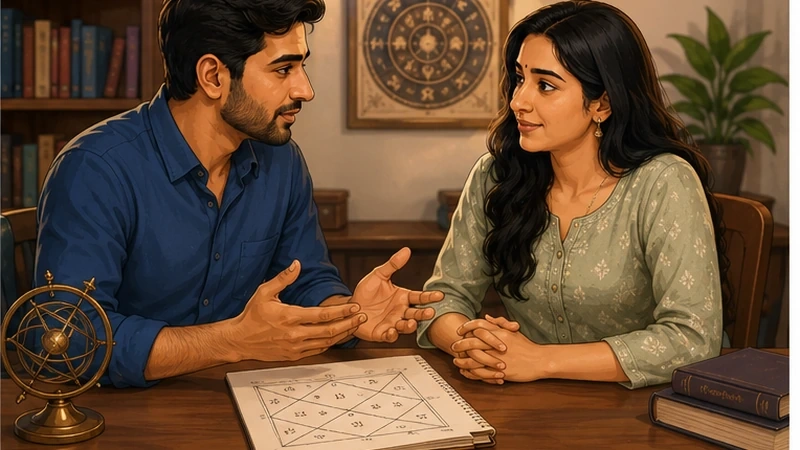
Some people use Vedic astrology before marriage to understand temperament, emotional patterns, expectations, compatibility and possible areas of tension.
A kundli comparison may examine more than a single score or isolated planetary placement. It can consider the broader condition of marriage-related houses, planetary influences, emotional tendencies, communication patterns and relevant timing.
However, astrology should not be treated as a guarantee that a marriage will succeed or fail. Two charts that appear supportive still require honesty, maturity and effort from both people.
Similarly, one difficult astrological factor should not become the sole reason for fear or rejection. General rules can be misunderstood when removed from the context of the complete charts.
This is where detailed, case-specific analysis becomes important. The same combination may operate differently depending on the strength of other planets, the overall chart pattern and the circumstances of both individuals.
Astrological assessment can support reflection, but it should complement—not replace—practical conversations about values, responsibility, consent, finances, health, family expectations and long-term goals.
When Personalised Guidance Becomes Relevant
General information can explain what usually contributes to a healthy marriage, but it cannot decide whether two specific people should marry.
Personalised guidance may become useful when there is uncertainty about compatibility, repeated relationship conflict, family opposition, marriage delay or major differences in expectations.
It may also help when someone has read many general interpretations but remains confused because different rules appear to contradict one another.
In such cases, the situation should be considered as a whole rather than reduced to one guna score, one house, one planet or one difficult period.
Would Personal Guidance Help Your Situation?
If you are facing uncertainty involving compatibility, marriage delay, repeated conflict, family opposition or an important marriage decision, general information may not answer every part of your situation.
For personalised astrological guidance regarding your specific circumstances, use the WhatsApp icon in the footer below.
Conclusion
The importance of marriage in modern times lies in the possibility of creating a dependable and respectful partnership. Marriage can offer companionship, shared responsibility, emotional support and a stable framework for long-term planning.
Its value, however, does not come from social status or ceremony alone. A meaningful marriage depends on consent, communication, maturity, trust, equality and the willingness of both partners to grow together.
Marriage should be chosen thoughtfully rather than treated as a compulsory milestone. General information can help a person understand what healthy partnership requires, but decisions involving a particular relationship need careful consideration of real-life circumstances, compatibility and individual expectations.
Frequently Asked Questions About Marriage in Modern Times
Is marriage still relevant in modern times?
Yes, marriage remains relevant for people who want a committed partnership, shared responsibilities and long-term companionship. Its modern value depends less on social obligation and more on the quality, consent and mutual respect within the relationship.
What is the main purpose of marriage today?
The purpose of marriage differs between couples. It may include companionship, emotional support, family building, shared financial planning and a formal commitment to facing life together.
What are the benefits of marriage in modern society?
A healthy marriage may provide emotional support, practical cooperation, shared planning and a sense of stability. These benefits are not automatic and depend on how responsibly both partners maintain the relationship.
Does marriage guarantee happiness and stability?
No. Marriage cannot guarantee happiness, compatibility or security. Communication, trust, maturity, financial responsibility and respectful behaviour determine the quality of married life more than marital status alone.
How has marriage changed from traditional times?
Modern marriage generally gives greater importance to personal choice, emotional compatibility, equality and flexible responsibilities. Traditional family and cultural values may remain important, but couples increasingly expect greater independence in their decisions.
What makes a modern marriage successful?
A successful modern marriage usually requires clear communication, trust, mutual respect, shared responsibility, healthy boundaries, adaptability and support for each partner’s individual development.
Is love alone enough for a successful marriage?
Love is important, but it is not enough by itself. Long-term marriage also requires compatible values, realistic expectations, maturity, financial understanding and the ability to resolve conflict respectfully.
Can astrology help before making a marriage decision?
Astrology may help people explore temperament, compatibility and possible relationship patterns. It should not be used as the sole basis for marriage. The complete charts and practical realities of the relationship should both be considered.