Enmity and Friendship of Planets in Vedic Astrology
Why Planetary Friendship and Enmity Matter in Vedic Astrology
Why do some planets strengthen each other while others create friction, delay, or confusion? Why does one conjunction produce support and growth, while another creates stress even when both planets look strong on paper? The answer often begins with the enmity and friendship of planets. In Vedic astrology, every graha has a natural relationship with other grahas, and that relationship affects how their results combine in a birth chart. This is why friends and enemies of planets in Vedic astrology are not just theory. They help explain whether two planetary energies cooperate, tolerate each other, or work against each other.
Most people first learn planetary friendship as a simple list, but is that enough to judge a chart? Not really. A planet can be a natural friend, enemy, or neutral, yet its actual behavior may change when it is placed in a certain house from another planet. This is where the subject becomes more useful. If someone only memorizes the table and stops there, they may miss why a promising yoga weakens, why a career combination struggles, or why marriage matters become inconsistent. So when discussing enmity and friendship of planets, it helps to understand three layers together: natural friendship, temporary friendship, and compound relationship.
Natural Friendship and Enmity of Planets
Natural friendship, also called Naisargika Maitri, shows the permanent relationship between planets. You can think of it as the basic chemistry between grahas. Do they naturally support one another, or do they pull in opposite directions? This matters because planets do not act in isolation. When friendly planets combine, their agendas align more easily. When enemy planets join, the native may experience inner conflict, mixed outcomes, or delay in the areas they influence.
Sun friends and enemies are important because the Sun represents authority, vitality, confidence, and status. The Sun is naturally friendly with Moon, Mars, and Jupiter. It treats Venus and Saturn as enemies, while Mercury remains neutral. So what happens when the Sun combines with Mars or Jupiter? It usually gets support for leadership, conviction, and purpose. But what happens when the Sun combines with Saturn or Venus? The chart may show friction between ego and duty, or between authority and comfort.
The Moon works differently because it governs the mind, emotions, and responsiveness. The Moon is friendly with Sun and Mercury, has no natural enemies in the classical list you shared, and treats Mars, Jupiter, Venus, and Saturn as neutral. Why does this matter? Because the Moon absorbs influence quickly. A supportive planetary environment can stabilize the mind, while a strained environment can create emotional inconsistency, especially when the Moon is already weak.
Mars friends and enemies become very relevant in charts dealing with property, siblings, courage, competition, or conflict. Mars is friendly with Sun, Moon, and Jupiter. Mercury is its enemy, while Venus and Saturn are neutral. This explains why Mars does better with planets that support action and conviction, but clashes with Mercury’s over-analysis. Have you noticed how some people act decisively while others overthink themselves into mistakes? A difficult Mars-Mercury relationship can show exactly that kind of tension between instinct and logic.
Mercury friends and enemies are especially important in education, speech, trade, calculation, communication, and business decisions. Mercury is friendly with Sun and Venus, considers Moon an enemy, and treats Mars, Jupiter, and Saturn as neutral. So why can Mercury sometimes perform brilliantly and at other times become scattered? Because Mercury needs the right company. With Sun or Venus, intelligence may become expressive, commercial, articulate, and polished. With Moon as an enemy, logic and emotion may stop moving in the same direction.
Jupiter friends and enemies are central to understanding wisdom, dharma, guidance, children, fortune, and ethical judgment. Jupiter is friendly with Sun, Moon, and Mars. Mercury and Venus are its enemies, while Saturn is neutral. This often surprises readers because Jupiter and Venus are both benefics, so shouldn’t they always help each other? Not necessarily. They represent different value systems. Jupiter expands truth, principles, and higher wisdom, while Venus seeks pleasure, relationship, comfort, and worldly enjoyment. When the two are strained, a person may keep swinging between idealism and indulgence.
Venus governs love, marriage, beauty, luxury, enjoyment, and agreements. Venus is friendly with Mercury and Saturn, sees Sun and Moon as enemies, and remains neutral toward Mars and Jupiter. What does this show in real life? Venus likes refinement, balance, and relationship diplomacy. It works well with Mercury’s intelligence and Saturn’s practicality, but it can feel strained under the harsher authority of the Sun or the fluctuating emotional pull of the Moon.
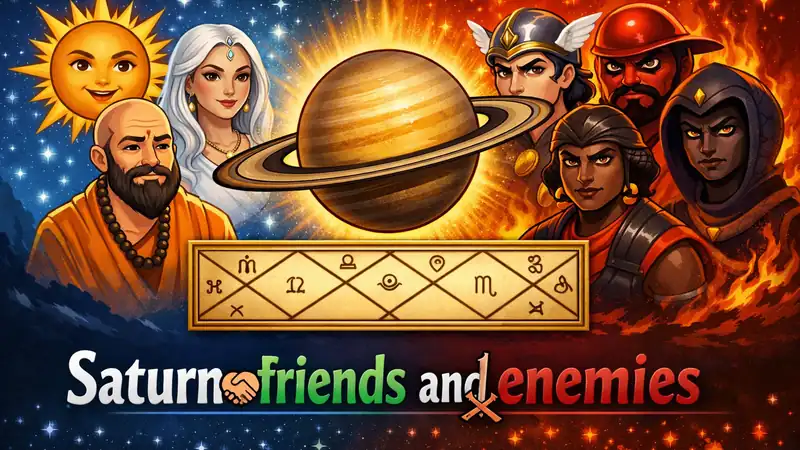
Saturn friends and enemies matter deeply in career, discipline, endurance, delay, karma, responsibility, and long-term struggle. Saturn is friendly with Mercury and Venus. It treats Sun, Moon, and Mars as enemies, while Jupiter is neutral. Why do Saturn periods feel productive for some people and suffocating for others? Because Saturn rewards structure, patience, and realism. When it gets support from Mercury or Venus, effort becomes organized and useful. When it clashes with Sun, Moon, or Mars, the native may feel pulled between pressure and impatience.
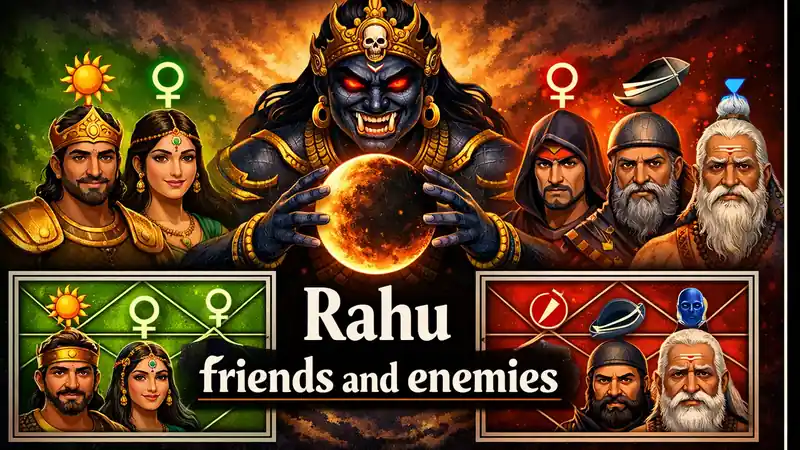
Rahu friends and enemies create confusion for many readers because Rahu behaves in unconventional ways and often amplifies whatever it touches. In the framework you provided, Rahu is friendly with Jupiter, Venus, and Saturn, and treats Sun, Moon, and Mars as enemies. This makes sense when you see Rahu as ambitious, disruptive, boundary-breaking, and materially hungry. Why does Rahu often create obsession or extreme results? Because it does not work in moderation. If supported by friendly planets, it can produce bold worldly gains. If badly placed with enemies, it can create anxiety, distortion, rebellion, or unstable judgment.

Ketu friends and enemies also need careful reading because Ketu does not act like a normal worldly graha. In the framework you provided, Ketu is friendly with Mars, Venus, and Saturn, and treats Sun and Moon as enemies. Ketu separates, internalizes, spiritualizes, and cuts attachment. So why can Ketu give brilliance in one chart and detachment, confusion, or isolation in another? Because Ketu reduces interest in the outer world and pushes the native toward deeper, less visible lessons. When handled well, it sharpens intuition. When poorly supported, it can disconnect effort from emotional satisfaction.
Why Friendship and Enmity Change Results in a Chart
Knowing the table is useful, but how do you actually apply it? Start by asking a practical question: are the planets trying to build the same result, or are they pulling life in two different directions? Friendly planets usually cooperate in delivering house results. Enemy planets may still produce strong events, but the result often comes with friction, stress, compromise, or delay. This is why two strong planets are not always easy planets.
Take the Sun and Saturn as an example. One wants recognition, command, and center stage. The other wants humility, endurance, labor, and reality checks. If these two are tightly connected, the person may struggle between self-assertion and pressure. Now compare that with Sun and Jupiter. One gives authority, the other gives wisdom and counsel. Their cooperation can make decisions clearer and leadership more respected. So the same house can feel empowered in one chart and burdened in another, depending on planetary friendship.
The same logic works with Mars and Mercury. Mars wants immediate action. Mercury wants analysis, comparison, and detail. If these two are strained, what happens? The person may speak sharply, act too quickly, or keep bouncing between impatience and overthinking. But if Mars is receiving support from friendly planets and Mercury is well placed, the same chart can produce strategic courage rather than scattered aggression.
Temporary Friendship of Planets
This brings us to Tatkalik Maitri, or temporary friendship. Why do two naturally difficult planets sometimes behave better than expected? Why does a naturally friendly pair sometimes fail to help each other? Because temporary relationship depends on house placement from one another in the horoscope. Planets placed in the 2nd, 3rd, 4th, 10th, 11th, or 12th from each other are temporary friends. Planets placed in the 1st, 5th, 6th, 7th, 8th, or 9th from each other are temporary enemies.
This rule matters because a birth chart is not static symbolism. Placement changes interaction. A naturally difficult pair may soften if they become temporary friends in the horoscope. A naturally supportive pair may lose some of that ease if they fall into temporary enmity. So if someone asks, “Why is Jupiter giving mixed support even though it is a benefic?” or “Why is Mercury not helping career despite being strong?” the answer may lie in temporary relationship, not just natural status.
Panchadha Maitri or Compound Relationship
The most practical layer is Panchadha Maitri, the compound relationship. This combines natural friendship and temporary friendship to show how planets actually function together in a specific chart. Why is this important? Because chart interpretation becomes more realistic when you stop treating friendship as fixed and start reading it as contextual.
If a natural friend is also a temporary friend, the result becomes Adhi Mitra, or best friend. If a natural neutral becomes a temporary friend, or a natural friend becomes a temporary enemy, the final result may still stay in the friend zone depending on the combination logic. If a natural enemy becomes a temporary friend, the result may shift toward neutrality. If a natural neutral becomes a temporary enemy, it may become an enemy. If a natural enemy is also a temporary enemy, the result becomes Adhi Shatru, or bitter enemy. This is the layer that explains why one conjunction feels cooperative and another feels unstable even when textbook labels look similar.
How to Read Friends and Enemies of Planets in Vedic Astrology Correctly
So how should someone actually use the friends and enemies of planets in Vedic astrology without oversimplifying the chart? First, identify the natural relationship. Second, check whether the planets are temporary friends or temporary enemies by house position. Third, see what houses they rule and where they sit. Fourth, judge dignity, aspects, conjunctions, combustion, retrogression, and overall strength. Only then should you decide whether the relationship is supportive, mixed, or harmful.
This is especially useful in predictive work. Suppose Jupiter and Venus are influencing marriage or career. Are they fighting over values, or are they working in balance? Suppose Rahu is linked with Saturn. Is ambition becoming disciplined, or is fear turning into pressure and obsession? Suppose Ketu is tied to Mars. Is it producing sharp inner discipline, or frustration and separation? These questions matter because the same pair of planets can behave very differently depending on context.
Planet-Wise Quick Understanding
If someone is searching Jupiter friends and enemies, the key idea is that Jupiter thrives with Sun, Moon, and Mars because these planets support clarity, courage, and dharmic direction. If someone is searching Mercury friends and enemies, the key point is that Mercury performs best when intelligence has stable support, especially from Sun and Venus. If someone is searching Mars friends and enemies, the chart should be checked for whether action is being guided or provoked. If someone is searching Saturn friends and enemies, the question is whether discipline is being supported or blocked by ego, emotion, or impatience.
If someone is searching Sun friends and enemies, the issue usually comes down to confidence, visibility, father-related themes, authority, and self-expression. If someone is searching Rahu friends and enemies or Ketu friends and enemies, the deeper question is not just who they like or dislike, but whether the chart can contain their extreme nature properly. Rahu expands hunger. Ketu cuts attachment. Their relationships become especially important when they are active in major houses or operating in dasha periods.
Why This Topic Matters More Than People Think
Many chart mistakes begin here. People see a benefic and assume good results. They see a malefic and assume trouble. They see two planets together and assume combination alone tells the story. But does it? Not always. The enmity and friendship of planets often explains why help comes with strain, why success comes with sacrifice, or why a planet gives partial rather than full results. It also explains why remedies or expectations can go wrong when the relationship between grahas is misunderstood.
In practical terms, this subject helps in marriage analysis, career timing, business partnerships, property matters, education, mental peace, and family dynamics. If the planets connected to those houses are friendly, the path is usually smoother. If they are enemies, the result may still come, but the native often feels resistance, delay, emotional wear, or conflicting priorities. That is why this topic is not just for students of astrology. It is for anyone trying to understand why life outcomes feel aligned in some areas and blocked in others.
A birth chart can be misread very quickly when someone memorizes only a table and ignores placement, temporary relationship, and compound strength. If the same pair of planets is repeatedly affecting your marriage, career, finances, or peace of mind, clarity becomes urgent because the wrong conclusion leads to the wrong expectations. In that situation, a careful reading from an experienced Vedic astrologer can help separate simple textbook friendship from the actual relationship playing out in your chart.
English Frequently Asked Questions
Why do some planets strengthen each other while others create friction in Vedic astrology?
The answer often lies in the enmity and friendship of planets. In Vedic astrology, every planet has a natural relationship with other planets, and that relationship affects how their results combine in a birth chart. Friendly planets support each other, while enemy planets create tension, mixed results, or delays.
Is knowing the natural friendship of planets enough to judge a birth chart?
No, knowing only natural friendship is not enough. A planet may be a natural friend or enemy, but its behavior can change depending on its house placement relative to another planet. To judge accurately, natural friendship, temporary friendship, and compound relationships must all be considered.
What are Sun friends and enemies in Vedic astrology?
The Sun is naturally friendly with Moon, Mars, and Jupiter. It considers Venus and Saturn as enemies, while Mercury remains neutral. These relationships affect authority, confidence, and leadership results in a chart.
Why does Mars clash with Mercury in astrology?
Mars represents action and instinct, while Mercury represents analysis and logic. When these two are enemies, it creates tension between quick decisions and overthinking, often leading to impulsive actions or confused decision-making.
Why are Jupiter and Venus considered enemies despite both being benefic planets?
Jupiter and Venus represent different value systems. Jupiter focuses on wisdom, truth, and higher principles, while Venus represents pleasure, relationships, and material comfort. Their opposing priorities can create inner conflict between idealism and enjoyment.
What are Rahu friends and enemies in Vedic astrology?
Rahu is considered friendly with Jupiter, Venus, and Saturn, while it treats Sun, Moon, and Mars as enemies. Rahu amplifies desires and ambitions, so its results depend heavily on whether it is supported by friendly or enemy planets.
What is temporary friendship (Tatkalik Maitri) of planets?
Temporary friendship depends on the house placement of planets from each other in a chart. Planets placed in the 2nd, 3rd, 4th, 10th, 11th, or 12th houses from each other are temporary friends, while those in the 1st, 5th, 6th, 7th, 8th, or 9th houses are temporary enemies.
Why do naturally friendly planets sometimes give weak results?
Even if planets are natural friends, their results can weaken if they become temporary enemies due to house placement. This shows that chart context matters more than fixed relationships.
What is Panchadha Maitri or compound relationship of planets?
Panchadha Maitri combines natural and temporary relationships to determine how planets actually behave together in a chart. It classifies relationships into categories like best friend, friend, neutral, enemy, and bitter enemy.
How should friends and enemies of planets be analyzed correctly?
To analyze correctly, first identify the natural relationship between planets, then check their temporary relationship based on house placement. After that, evaluate house rulership, placement, aspects, conjunctions, and overall strength before concluding the final result.
Why is the concept of enmity and friendship of planets important in real life?
This concept helps explain why some life areas like marriage, career, or finances feel smooth while others face resistance or delays. It shows whether planetary energies are cooperating or conflicting, which directly impacts real-life experiences.
Can enemy planets still give positive results?
Yes, enemy planets can still produce strong results, but those results often come with stress, compromise, delay, or internal conflict. The outcome depends on overall chart strength and planetary placement.
Hindi Transcript (हिंदी प्रतिलेख)
वैदिक ज्योतिष में ग्रहों की मित्रता और शत्रुता
कुछ ग्रह एक-दूसरे को मजबूत क्यों करते हैं, जबकि कुछ घर्षण, देरी या भ्रम पैदा करते हैं? एक युति सहयोग और विकास क्यों देती है, जबकि दूसरी तनाव पैदा करती है, भले ही दोनों ग्रह कागज़ पर मजबूत दिख रहे हों? इसका उत्तर अक्सर ग्रहों की मित्रता और शत्रुता से शुरू होता है। वैदिक ज्योतिष में हर ग्रह का दूसरे ग्रहों के साथ एक स्वाभाविक संबंध होता है, और वही संबंध जन्म कुंडली में उनके संयुक्त फलों को प्रभावित करता है। यही कारण है कि वैदिक ज्योतिष में ग्रहों के मित्र और शत्रु केवल सिद्धांत नहीं हैं। वे यह समझाने में मदद करते हैं कि दो ग्रहों की ऊर्जाएं एक-दूसरे का सहयोग करती हैं, एक-दूसरे को सहन करती हैं, या एक-दूसरे के विरुद्ध काम करती हैं।
अधिकतर लोग ग्रहों की मित्रता को पहले एक साधारण सूची के रूप में सीखते हैं, लेकिन क्या कुंडली का निर्णय करने के लिए इतना ही काफी है? बिल्कुल नहीं। कोई ग्रह स्वाभाविक मित्र, शत्रु या सम हो सकता है, फिर भी उसका वास्तविक व्यवहार इस बात से बदल सकता है कि वह दूसरे ग्रह से किस भाव में स्थित है। यहीं यह विषय और उपयोगी हो जाता है। यदि कोई केवल तालिका याद कर ले और वहीं रुक जाए, तो वह यह समझ नहीं पाएगा कि कोई अच्छा योग कमजोर क्यों हो गया, करियर का संयोजन संघर्षपूर्ण क्यों बन गया, या विवाह संबंधी विषय अस्थिर क्यों हो गए। इसलिए जब ग्रहों की मित्रता और शत्रुता की बात की जाती है, तो तीन स्तरों को साथ में समझना जरूरी है: स्वाभाविक मित्रता, तात्कालिक मित्रता, और मिश्रित संबंध।
ग्रहों की स्वाभाविक मित्रता और शत्रुता
स्वाभाविक मित्रता, जिसे नैसर्गिक मैत्री भी कहा जाता है, ग्रहों के बीच स्थायी संबंध को दर्शाती है। आप इसे ग्रहों के बीच की मूल रसायन के रूप में समझ सकते हैं। क्या वे स्वाभाविक रूप से एक-दूसरे का समर्थन करते हैं, या विपरीत दिशाओं में खींचते हैं? यह इसलिए महत्वपूर्ण है क्योंकि ग्रह अलग-अलग काम नहीं करते। जब मित्र ग्रह एक साथ आते हैं, तो उनके उद्देश्य अधिक सहजता से मेल खाते हैं। जब शत्रु ग्रह साथ आते हैं, तो जातक को उन क्षेत्रों में आंतरिक संघर्ष, मिश्रित परिणाम या देरी का अनुभव हो सकता है जिन्हें वे प्रभावित करते हैं।
सूर्य के मित्र और शत्रु महत्वपूर्ण हैं क्योंकि सूर्य अधिकार, जीवनशक्ति, आत्मविश्वास और प्रतिष्ठा का प्रतिनिधित्व करता है। सूर्य स्वाभाविक रूप से चंद्र, मंगल और गुरु का मित्र है। वह शुक्र और शनि को शत्रु मानता है, जबकि बुध तटस्थ रहता है। तो जब सूर्य मंगल या गुरु के साथ जुड़ता है, तब क्या होता है? उसे नेतृत्व, दृढ़ता और उद्देश्य के लिए समर्थन मिलता है। लेकिन जब सूर्य शनि या शुक्र के साथ जुड़ता है, तब क्या होता है? तब कुंडली में अहं और कर्तव्य के बीच, या अधिकार और आराम के बीच टकराव दिख सकता है।
चंद्रमा अलग तरह से काम करता है क्योंकि वह मन, भावनाओं और प्रतिक्रिया क्षमता को नियंत्रित करता है। चंद्रमा सूर्य और बुध का मित्र है, आपके द्वारा साझा की गई शास्त्रीय सूची में उसका कोई स्वाभाविक शत्रु नहीं है, और वह मंगल, गुरु, शुक्र और शनि को सम मानता है। यह क्यों महत्वपूर्ण है? क्योंकि चंद्रमा प्रभावों को बहुत जल्दी ग्रहण करता है। सहायक ग्रह वातावरण मन को स्थिर कर सकता है, जबकि तनावपूर्ण वातावरण भावनात्मक अस्थिरता पैदा कर सकता है, विशेषकर जब चंद्रमा पहले से ही कमजोर हो।
मंगल के मित्र और शत्रु उन कुंडलियों में बहुत प्रासंगिक हो जाते हैं जो संपत्ति, भाई-बहन, साहस, प्रतियोगिता या संघर्ष से जुड़ी हों। मंगल सूर्य, चंद्र और गुरु का मित्र है। बुध उसका शत्रु है, जबकि शुक्र और शनि सम हैं। इससे स्पष्ट होता है कि मंगल उन ग्रहों के साथ बेहतर काम करता है जो क्रिया और दृढ़ता का समर्थन करते हैं, लेकिन वह बुध की अत्यधिक विश्लेषणात्मक प्रवृत्ति से टकराता है। क्या आपने देखा है कि कुछ लोग निर्णायक रूप से कार्य करते हैं जबकि कुछ लोग जरूरत से ज्यादा सोचकर खुद को गलती में डाल देते हैं? कठिन मंगल-बुध संबंध ठीक इसी प्रकार के तनाव को दिखा सकता है, जहां सहज प्रवृत्ति और तर्क के बीच टकराव होता है।
बुध के मित्र और शत्रु शिक्षा, वाणी, व्यापार, गणना, संवाद और व्यावसायिक निर्णयों में विशेष महत्व रखते हैं। बुध सूर्य और शुक्र का मित्र है, चंद्रमा को शत्रु मानता है, और मंगल, गुरु तथा शनि को सम मानता है। तो बुध कभी बहुत शानदार क्यों काम करता है और कभी बिखरा हुआ क्यों हो जाता है? क्योंकि बुध को सही साथ चाहिए। सूर्य या शुक्र के साथ बुद्धि अभिव्यक्तिशील, व्यावसायिक, स्पष्ट बोलने वाली और परिष्कृत बन सकती है। चंद्रमा शत्रु होने पर तर्क और भावना एक दिशा में नहीं चल पाते।
गुरु के मित्र और शत्रु ज्ञान, धर्म, मार्गदर्शन, संतान, भाग्य और नैतिक निर्णय को समझने के लिए बहुत महत्वपूर्ण हैं। गुरु सूर्य, चंद्र और मंगल का मित्र है। बुध और शुक्र उसके शत्रु हैं, जबकि शनि सम है। यह बात अक्सर पाठकों को आश्चर्यचकित करती है क्योंकि गुरु और शुक्र दोनों शुभ ग्रह हैं, तो क्या उन्हें हमेशा एक-दूसरे की मदद नहीं करनी चाहिए? जरूरी नहीं। वे अलग-अलग मूल्य प्रणालियों का प्रतिनिधित्व करते हैं। गुरु सत्य, सिद्धांत और उच्च ज्ञान का विस्तार करता है, जबकि शुक्र सुख, संबंध, आराम और सांसारिक आनंद चाहता है। जब इन दोनों के बीच तनाव हो, तो व्यक्ति आदर्शवाद और भोग के बीच झूल सकता है।
शुक्र प्रेम, विवाह, सौंदर्य, विलास, आनंद और समझौतों का कारक है। शुक्र बुध और शनि का मित्र है, सूर्य और चंद्रमा को शत्रु मानता है, और मंगल तथा गुरु के प्रति सम रहता है। यह वास्तविक जीवन में क्या दिखाता है? शुक्र को परिष्कार, संतुलन और संबंधों की कूटनीति पसंद है। वह बुध की बुद्धिमत्ता और शनि की व्यावहारिकता के साथ अच्छा काम करता है, लेकिन सूर्य के कठोर अधिकार या चंद्रमा की बदलती भावनात्मक खींचतान के अधीन वह तनाव महसूस कर सकता है।
शनि के मित्र और शत्रु करियर, अनुशासन, सहनशक्ति, देरी, कर्म, जिम्मेदारी और लंबी अवधि के संघर्ष में गहरा महत्व रखते हैं। शनि बुध और शुक्र का मित्र है। वह सूर्य, चंद्र और मंगल को शत्रु मानता है, जबकि गुरु सम है। कुछ लोगों के लिए शनि की दशाएं उत्पादक क्यों होती हैं और कुछ के लिए घुटनभरी क्यों? क्योंकि शनि संरचना, धैर्य और यथार्थवाद का पुरस्कार देता है। जब उसे बुध या शुक्र का समर्थन मिलता है, तो मेहनत संगठित और उपयोगी बनती है। जब वह सूर्य, चंद्र या मंगल से टकराता है, तो जातक दबाव और अधीरता के बीच खिंचा हुआ महसूस कर सकता है।
राहु के मित्र और शत्रु कई पाठकों के लिए भ्रम पैदा करते हैं क्योंकि राहु असामान्य ढंग से काम करता है और अक्सर जिस चीज़ को छूता है उसे बढ़ा देता है। आपके दिए हुए ढांचे में राहु गुरु, शुक्र और शनि का मित्र है, और सूर्य, चंद्र तथा मंगल को शत्रु मानता है। यह बात तब समझ आती है जब आप राहु को महत्वाकांक्षी, विघटनकारी, सीमाएं तोड़ने वाला और भौतिक रूप से भूखा मानते हैं। राहु अक्सर आसक्ति या चरम परिणाम क्यों देता है? क्योंकि वह संयम में काम नहीं करता। यदि उसे मित्र ग्रहों का समर्थन मिले, तो वह साहसी सांसारिक लाभ दे सकता है। यदि वह शत्रु ग्रहों के साथ खराब स्थिति में हो, तो वह चिंता, विकृति, विद्रोह या अस्थिर निर्णय पैदा कर सकता है।
केतु के मित्र और शत्रु को भी सावधानी से पढ़ना चाहिए क्योंकि केतु सामान्य सांसारिक ग्रह की तरह काम नहीं करता। आपके दिए हुए ढांचे में केतु मंगल, शुक्र और शनि का मित्र है, और सूर्य तथा चंद्रमा को शत्रु मानता है। केतु अलग करता है, भीतर की ओर ले जाता है, आध्यात्मिक बनाता है और आसक्ति को काटता है। तो केतु एक कुंडली में प्रतिभा और दूसरी में विरक्ति, भ्रम या अलगाव क्यों देता है? क्योंकि केतु बाहरी दुनिया में रुचि कम करता है और जातक को गहरे, कम दिखाई देने वाले पाठों की ओर धकेलता है। जब इसे सही तरह से संभाला जाए, तो यह अंतर्ज्ञान को तेज करता है। जब इसे कमजोर सहारा मिले, तो यह प्रयास और भावनात्मक संतोष के बीच दूरी पैदा कर सकता है।
कुंडली में मित्रता और शत्रुता परिणामों को क्यों बदलती है
तालिका जानना उपयोगी है, लेकिन इसे वास्तव में कैसे लागू किया जाए? शुरुआत एक व्यावहारिक प्रश्न से करें: क्या ग्रह एक ही परिणाम बनाने की कोशिश कर रहे हैं, या वे जीवन को दो अलग दिशाओं में खींच रहे हैं? मित्र ग्रह सामान्यतः भावों के फल देने में सहयोग करते हैं। शत्रु ग्रह भी मजबूत घटनाएं दे सकते हैं, लेकिन परिणाम अक्सर घर्षण, तनाव, समझौते या देरी के साथ आता है। यही कारण है कि दो मजबूत ग्रह हमेशा आसान ग्रह नहीं होते।
सूर्य और शनि का उदाहरण लें। एक मान्यता, अधिकार और केंद्र में रहना चाहता है। दूसरा विनम्रता, सहनशक्ति, श्रम और यथार्थ की मांग करता है। यदि ये दोनों घनिष्ठ रूप से जुड़े हों, तो व्यक्ति आत्म-अभिव्यक्ति और दबाव के बीच संघर्ष कर सकता है। अब इसकी तुलना सूर्य और गुरु से करें। एक अधिकार देता है, दूसरा ज्ञान और परामर्श। उनका सहयोग निर्णयों को अधिक स्पष्ट और नेतृत्व को अधिक सम्मानित बना सकता है। इसलिए एक ही भाव एक कुंडली में सशक्त और दूसरी में बोझिल महसूस हो सकता है, और इसका कारण ग्रहों की मित्रता होती है।
यही तर्क मंगल और बुध पर भी लागू होता है। मंगल तुरंत क्रिया चाहता है। बुध विश्लेषण, तुलना और विवरण चाहता है। यदि इन दोनों में तनाव हो, तो क्या होता है? व्यक्ति तीखे शब्द बोल सकता है, बहुत जल्दी कार्य कर सकता है, या अधीरता और अधिक सोचने के बीच झूलता रह सकता है। लेकिन यदि मंगल को मित्र ग्रहों का समर्थन मिल रहा हो और बुध अच्छी स्थिति में हो, तो वही कुंडली बिखरी हुई आक्रामकता के बजाय रणनीतिक साहस दे सकती है।
ग्रहों की तात्कालिक मित्रता
अब बात आती है तात्कालिक मैत्री की। दो स्वाभाविक रूप से कठिन ग्रह कभी-कभी उम्मीद से बेहतर व्यवहार क्यों करते हैं? एक स्वाभाविक रूप से मित्र जोड़ी कभी-कभी एक-दूसरे की मदद करने में क्यों असफल हो जाती है? क्योंकि तात्कालिक संबंध इस बात पर निर्भर करता है कि कुंडली में ग्रह एक-दूसरे से किस भाव में स्थित हैं। जो ग्रह एक-दूसरे से 2, 3, 4, 10, 11 या 12वें भाव में हों, वे तात्कालिक मित्र होते हैं। जो ग्रह 1, 5, 6, 7, 8 या 9वें भाव में हों, वे तात्कालिक शत्रु होते हैं।
यह नियम इसलिए महत्वपूर्ण है क्योंकि जन्म कुंडली स्थिर प्रतीकवाद नहीं है। स्थिति बदलती है, तो परस्पर व्यवहार भी बदलता है। एक स्वाभाविक रूप से कठिन जोड़ी नरम पड़ सकती है यदि वे कुंडली में तात्कालिक मित्र बन जाएं। एक स्वाभाविक रूप से सहयोगी जोड़ी कुछ सहजता खो सकती है यदि वे तात्कालिक शत्रुता में आ जाएं। इसलिए यदि कोई पूछे, “गुरु शुभ होकर भी मिश्रित समर्थन क्यों दे रहा है?” या “बुध मजबूत होने के बावजूद करियर में मदद क्यों नहीं कर रहा?” तो इसका उत्तर केवल स्वाभाविक स्थिति में नहीं, बल्कि तात्कालिक संबंध में भी छिपा हो सकता है।
पंचधा मैत्री या मिश्रित संबंध
सबसे व्यावहारिक स्तर पंचधा मैत्री है, यानी मिश्रित संबंध। यह स्वाभाविक मित्रता और तात्कालिक मित्रता को जोड़कर दिखाती है कि किसी विशेष कुंडली में ग्रह वास्तव में एक-दूसरे के साथ कैसे काम करते हैं। यह क्यों महत्वपूर्ण है? क्योंकि जब आप मित्रता को स्थिर मानने के बजाय संदर्भ के अनुसार पढ़ते हैं, तभी कुंडली का निर्णय अधिक वास्तविक बनता है।
यदि कोई स्वाभाविक मित्र तात्कालिक मित्र भी हो, तो परिणाम अधि मित्र बनता है, यानी श्रेष्ठ मित्र। यदि कोई स्वाभाविक सम तात्कालिक मित्र बन जाए, या कोई स्वाभाविक मित्र तात्कालिक शत्रु बन जाए, तो अंतिम परिणाम संयोजन के तर्क के आधार पर फिर भी मित्रता की श्रेणी में रह सकता है। यदि कोई स्वाभाविक शत्रु तात्कालिक मित्र बन जाए, तो परिणाम समता की ओर जा सकता है। यदि कोई स्वाभाविक सम तात्कालिक शत्रु बन जाए, तो वह शत्रु बन सकता है। यदि कोई स्वाभाविक शत्रु तात्कालिक शत्रु भी हो, तो परिणाम अधि शत्रु बनता है, यानी कट्टर शत्रु। यही वह स्तर है जो समझाता है कि एक युति सहयोगी क्यों महसूस होती है और दूसरी अस्थिर क्यों, जबकि पुस्तक में दिए गए लेबल समान दिखाई देते हों।
वैदिक ज्योतिष में ग्रहों के मित्र और शत्रु को सही तरह से कैसे पढ़ें
तो वैदिक ज्योतिष में ग्रहों के मित्र और शत्रु को बिना अधिक सरलीकरण के वास्तव में कैसे उपयोग किया जाए? पहले स्वाभाविक संबंध पहचानें। दूसरा, देखें कि ग्रह भाव स्थिति के आधार पर तात्कालिक मित्र हैं या तात्कालिक शत्रु। तीसरा, देखें कि वे किन भावों के स्वामी हैं और कहां स्थित हैं। चौथा, उनकी राशि स्थिति, दृष्टियां, युति, अस्त होना, वक्री होना और समग्र बल का निर्णय करें। तभी यह तय करना चाहिए कि संबंध सहायक है, मिश्रित है या हानिकारक।
यह विशेष रूप से भविष्यवाणी में उपयोगी है। मान लें गुरु और शुक्र विवाह या करियर को प्रभावित कर रहे हैं। क्या वे मूल्यों को लेकर टकरा रहे हैं, या संतुलन में काम कर रहे हैं? मान लें राहु शनि से जुड़ा है। क्या महत्वाकांक्षा अनुशासित बन रही है, या भय दबाव और आसक्ति में बदल रहा है? मान लें केतु मंगल से जुड़ा है। क्या वह तीखा आंतरिक अनुशासन पैदा कर रहा है, या निराशा और अलगाव? ये प्रश्न इसलिए महत्वपूर्ण हैं क्योंकि ग्रहों की वही जोड़ी संदर्भ के अनुसार बहुत अलग ढंग से काम कर सकती है।
ग्रह-वार त्वरित समझ
यदि कोई गुरु के मित्र और शत्रु खोज रहा है, तो मुख्य बात यह है कि गुरु सूर्य, चंद्र और मंगल के साथ फलता-फूलता है क्योंकि ये ग्रह स्पष्टता, साहस और धार्मिक दिशा का समर्थन करते हैं। यदि कोई बुध के मित्र और शत्रु खोज रहा है, तो मुख्य बात यह है कि बुध सबसे अच्छा तब काम करता है जब बुद्धि को स्थिर समर्थन मिले, विशेष रूप से सूर्य और शुक्र से। यदि कोई मंगल के मित्र और शत्रु खोज रहा है, तो कुंडली में यह देखना चाहिए कि क्रिया को मार्गदर्शन मिल रहा है या उकसाया जा रहा है। यदि कोई शनि के मित्र और शत्रु खोज रहा है, तो प्रश्न यह होगा कि अनुशासन को समर्थन मिल रहा है या वह अहं, भावना या अधीरता से अवरुद्ध हो रहा है।
यदि कोई सूर्य के मित्र और शत्रु खोज रहा है, तो विषय प्रायः आत्मविश्वास, दृश्यता, पिता संबंधी संकेत, अधिकार और आत्म-अभिव्यक्ति से जुड़ता है। यदि कोई राहु के मित्र और शत्रु या केतु के मित्र और शत्रु खोज रहा है, तो गहरा प्रश्न केवल यह नहीं होता कि वे किसे पसंद करते हैं या नापसंद, बल्कि यह होता है कि क्या कुंडली उनकी चरम प्रकृति को सही ढंग से संभाल सकती है। राहु भूख का विस्तार करता है। केतु आसक्ति को काटता है। उनके संबंध विशेष रूप से तब महत्वपूर्ण हो जाते हैं जब वे प्रमुख भावों में सक्रिय हों या दशा काल में चल रहे हों।
यह विषय लोगों की सोच से अधिक महत्वपूर्ण क्यों है
कुंडली पढ़ने की कई गलतियां यहीं से शुरू होती हैं। लोग किसी शुभ ग्रह को देखकर अच्छे परिणाम मान लेते हैं। किसी पाप ग्रह को देखकर समस्या मान लेते हैं। दो ग्रहों को साथ देखकर मान लेते हैं कि केवल युति ही पूरी कहानी बता देती है। लेकिन क्या वास्तव में ऐसा है? हमेशा नहीं। ग्रहों की मित्रता और शत्रुता अक्सर यह समझाती है कि मदद तनाव के साथ क्यों आती है, सफलता त्याग के साथ क्यों आती है, या कोई ग्रह पूर्ण परिणाम के बजाय आंशिक परिणाम क्यों देता है। यह भी समझाती है कि जब ग्रहों के संबंध को गलत समझा जाए, तो उपाय या अपेक्षाएं क्यों गलत हो सकती हैं।
व्यावहारिक रूप से यह विषय विवाह विश्लेषण, करियर समय, व्यावसायिक साझेदारी, संपत्ति संबंधी विषयों, शिक्षा, मानसिक शांति और पारिवारिक संबंधों में मदद करता है। यदि उन भावों से जुड़े ग्रह मित्र हों, तो राह सामान्यतः अधिक सहज होती है। यदि वे शत्रु हों, तो परिणाम फिर भी मिल सकता है, लेकिन जातक को अक्सर प्रतिरोध, देरी, भावनात्मक थकान या विरोधी प्राथमिकताओं का अनुभव होता है। यही कारण है कि यह विषय केवल ज्योतिष के विद्यार्थियों के लिए नहीं है। यह उन सभी लोगों के लिए है जो समझना चाहते हैं कि जीवन के कुछ क्षेत्र सहज क्यों चलते हैं और कुछ बार-बार अवरुद्ध क्यों होते हैं।
जन्म कुंडली को बहुत जल्दी गलत पढ़ लिया जाता है जब कोई केवल तालिका याद रखता है और स्थिति, तात्कालिक संबंध और मिश्रित बल को नज़रअंदाज़ कर देता है। यदि ग्रहों की वही जोड़ी बार-बार आपके विवाह, करियर, वित्त या मानसिक शांति को प्रभावित कर रही है, तो स्पष्टता जरूरी हो जाती है क्योंकि गलत निष्कर्ष गलत अपेक्षाओं तक ले जाता है। ऐसी स्थिति में किसी अनुभवी वैदिक ज्योतिषी से सावधानीपूर्वक परामर्श यह समझने में मदद कर सकता है कि पुस्तक में दी गई साधारण मित्रता और आपकी कुंडली में वास्तव में चल रहे संबंध में क्या अंतर है।
अक्सर पूछे जाने वाले प्रश्न
वैदिक ज्योतिष में कुछ ग्रह एक-दूसरे को मजबूत क्यों करते हैं जबकि कुछ घर्षण पैदा करते हैं?
इसका उत्तर अक्सर ग्रहों की मित्रता और शत्रुता में छिपा होता है। वैदिक ज्योतिष में हर ग्रह का दूसरे ग्रहों के साथ एक स्वाभाविक संबंध होता है, और वही संबंध जन्म कुंडली में उनके संयुक्त फलों को प्रभावित करता है। मित्र ग्रह एक-दूसरे का सहयोग करते हैं, जबकि शत्रु ग्रह तनाव, मिश्रित परिणाम या देरी उत्पन्न करते हैं।
क्या केवल ग्रहों की स्वाभाविक मित्रता जानना कुंडली का निर्णय करने के लिए पर्याप्त है?
नहीं, केवल स्वाभाविक मित्रता जानना पर्याप्त नहीं है। कोई ग्रह स्वाभाविक मित्र या शत्रु हो सकता है, लेकिन उसका व्यवहार इस बात पर बदल सकता है कि वह दूसरे ग्रह से किस भाव में स्थित है। सही निर्णय के लिए स्वाभाविक मित्रता, तात्कालिक मित्रता और मिश्रित संबंध तीनों को समझना आवश्यक है।
वैदिक ज्योतिष में सूर्य के मित्र और शत्रु कौन हैं?
सूर्य स्वाभाविक रूप से चंद्र, मंगल और गुरु का मित्र है। वह शुक्र और शनि को शत्रु मानता है, जबकि बुध तटस्थ रहता है। ये संबंध कुंडली में अधिकार, आत्मविश्वास और नेतृत्व के परिणामों को प्रभावित करते हैं।
ज्योतिष में मंगल और बुध के बीच टकराव क्यों होता है?
मंगल क्रिया और सहज प्रवृत्ति का प्रतिनिधित्व करता है, जबकि बुध विश्लेषण और तर्क का प्रतिनिधित्व करता है। जब ये दोनों शत्रु होते हैं, तो यह तेज निर्णय और अधिक सोच के बीच तनाव पैदा करता है, जिससे जल्दबाजी या भ्रमित निर्णय हो सकते हैं।
गुरु और शुक्र दोनों शुभ ग्रह होने के बावजूद शत्रु क्यों माने जाते हैं?
गुरु और शुक्र अलग-अलग मूल्य प्रणालियों का प्रतिनिधित्व करते हैं। गुरु ज्ञान, सत्य और उच्च सिद्धांतों पर ध्यान देता है, जबकि शुक्र सुख, संबंध और भौतिक आराम का प्रतिनिधित्व करता है। उनकी अलग प्राथमिकताएं आदर्शवाद और आनंद के बीच आंतरिक संघर्ष पैदा कर सकती हैं।
वैदिक ज्योतिष में राहु के मित्र और शत्रु कौन हैं?
राहु को गुरु, शुक्र और शनि का मित्र माना जाता है, जबकि वह सूर्य, चंद्र और मंगल को शत्रु मानता है। राहु इच्छाओं और महत्वाकांक्षाओं को बढ़ाता है, इसलिए उसके परिणाम इस बात पर निर्भर करते हैं कि उसे मित्र ग्रहों का समर्थन मिल रहा है या शत्रु ग्रहों का प्रभाव है।
ग्रहों की तात्कालिक मित्रता (Tatkalik Maitri) क्या होती है?
तात्कालिक मित्रता ग्रहों की आपसी भाव स्थिति पर निर्भर करती है। जो ग्रह एक-दूसरे से 2, 3, 4, 10, 11 या 12वें भाव में होते हैं, वे तात्कालिक मित्र होते हैं, जबकि 1, 5, 6, 7, 8 या 9वें भाव में स्थित ग्रह तात्कालिक शत्रु होते हैं।
स्वाभाविक रूप से मित्र ग्रह कभी-कभी कमजोर परिणाम क्यों देते हैं?
यदि ग्रह स्वाभाविक मित्र होने के बावजूद भाव स्थिति के कारण तात्कालिक शत्रु बन जाते हैं, तो उनके परिणाम कमजोर हो सकते हैं। यह दिखाता है कि कुंडली का संदर्भ स्थिर संबंधों से अधिक महत्वपूर्ण होता है।
पंचधा मैत्री या ग्रहों का मिश्रित संबंध क्या होता है?
पंचधा मैत्री स्वाभाविक और तात्कालिक संबंधों को मिलाकर यह निर्धारित करती है कि ग्रह वास्तव में कुंडली में कैसे व्यवहार करते हैं। इसमें संबंधों को श्रेष्ठ मित्र, मित्र, सम, शत्रु और कट्टर शत्रु जैसी श्रेणियों में वर्गीकृत किया जाता है।
ग्रहों के मित्र और शत्रु का सही विश्लेषण कैसे किया जाए?
सही विश्लेषण के लिए पहले ग्रहों का स्वाभाविक संबंध पहचानें, फिर भाव स्थिति के आधार पर उनकी तात्कालिक मित्रता या शत्रुता देखें। इसके बाद भाव स्वामित्व, स्थिति, दृष्टि, युति और समग्र बल का मूल्यांकन करके अंतिम निष्कर्ष निकालें।
ग्रहों की मित्रता और शत्रुता का वास्तविक जीवन में क्या महत्व है?
यह सिद्धांत समझाता है कि जीवन के कुछ क्षेत्र जैसे विवाह, करियर या वित्त सहज क्यों चलते हैं जबकि कुछ में देरी या बाधाएं आती हैं। यह दर्शाता है कि ग्रहों की ऊर्जाएं सहयोग कर रही हैं या संघर्ष, जो सीधे जीवन के अनुभवों को प्रभावित करता है।
क्या शत्रु ग्रह भी सकारात्मक परिणाम दे सकते हैं?
हाँ, शत्रु ग्रह भी मजबूत परिणाम दे सकते हैं, लेकिन वे परिणाम अक्सर तनाव, समझौते, देरी या आंतरिक संघर्ष के साथ आते हैं। अंतिम परिणाम कुंडली की समग्र शक्ति और ग्रहों की स्थिति पर निर्भर करता है।