
Shodash varga in astrology
Shodash varga in astrology refers to the sixteen divisional charts used in Vedic astrology to study life in greater detail. Many people naturally ask, if the birth chart already shows life, why is there a need for sixteen more charts? The answer is simple: the main chart gives the broad promise, but the vargas show how that promise behaves in specific areas such as marriage, wealth, career, children, education, comforts, spirituality, and karma. This is why Shodash varga in astrology is not treated as an optional extra. It is one of the clearest ways to move from a general reading to a more precise judgment.
Key Divisional Charts (Shodash Varga) & Their Focus
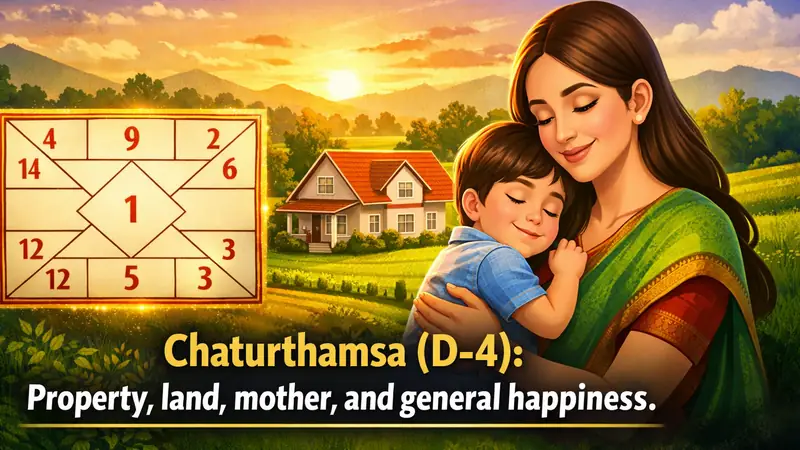
Rashi (D-1), Hora (D-2), Drekkana (D-3), and Chaturthamsa (D-4)
The starting point is always the Rashi chart or D-1, because that is the main structure of life, personality, and overall pattern. But is overall pattern enough when the real question is about money, family support, or courage during difficult periods? That is where the early divisional charts become important. Hora or D-2 is studied for wealth, assets, and financial condition. Drekkana or D-3 helps examine siblings, courage, initiative, and short journeys. Chaturthamsa or D-4 is linked with property, land, mother, inner contentment, and general happiness. These charts help separate one life area from another, so the reading does not stay vague.
Saptamsa (D-7), Navamsa (D-9), and Dashamsa (D-10)
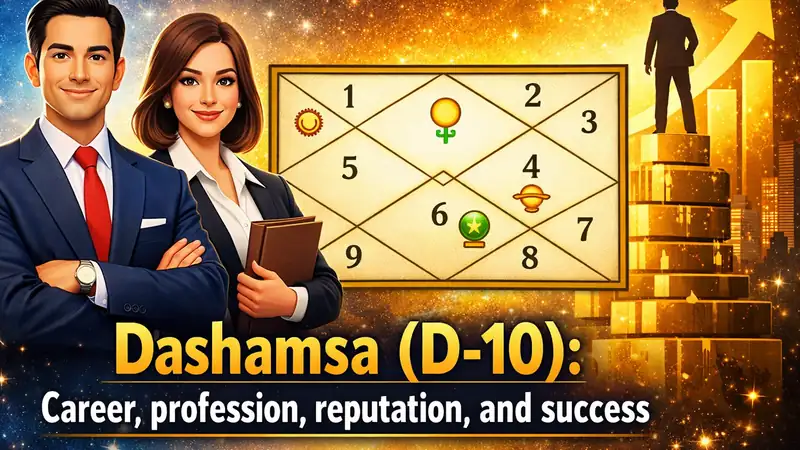
As the reading becomes more focused, the middle vargas begin to answer the questions people care about most. Is marriage strong in the chart, or does the birth chart only give a surface indication? Navamsa or D-9 is central for marriage, partnerships, dharma, and the deeper strength of planets. Is career progress promised, or is the person struggling because professional support is weak in the finer chart? Dashamsa or D-10 is used for career, profession, status, public life, and achievement. Saptamsa or D-7 is examined for children, creativity, and continuation through family. When these charts agree with the main chart, the result becomes more dependable.
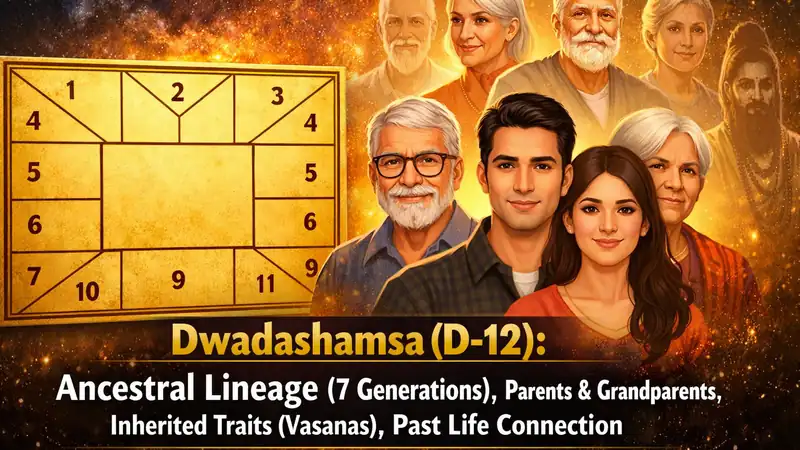
Dwadashamsa (D-12), Shodasamsa (D-16), Vimshamsa (D-20), and Chaturvimshamsa (D-24)
Shodash varga in astrology also covers areas that people often ignore until life forces the issue. Dwadashamsa or D-12 is useful for parents, ancestry, and family lineage. Shodasamsa or D-16 is connected with vehicles, comforts, luxuries, and the quality of material ease. Vimshamsa or D-20 turns the attention toward spirituality, worship, and religious inclination. Chaturvimshamsa or D-24 is studied for education, learning capacity, discipline in knowledge, and formal or traditional study. When someone asks, why does one person have opportunity but not peace, or faith but not stability, these charts help explain why life does not unfold in one straight line.
Saptavimshamsa (D-27) and Trimsamsa (D-30)
Then come the vargas that deal with strength, weakness, and hidden difficulty. Saptavimshamsa or D-27 is used for endurance, capacity, resilience, and inner weaknesses. Trimsamsa or D-30 is associated with misfortunes, suffering, ill health, and trouble patterns. These are the charts that often answer uncomfortable but necessary questions. Why does a person keep repeating the same struggle even after effort? Why do external success and internal pressure move in opposite directions? Without these divisional layers, the reading can become too simplified, and real causes remain hidden behind surface impressions.
Khavedamsa (D-40), Akshavedamsa (D-45), and Shastiamsa (D-60)
The higher vargas push the reading into subtler territory. Khavedamsa or D-40 is linked with auspicious and inauspicious ancestral patterns. Akshavedamsa or D-45 is connected with character, conduct, temperament, and overall life quality at a deeper level. Shastiamsa or D-60 is especially important for karmic effects and past-life residue. Many readers specifically search for Shodash varga in astrology because they want to understand why results do not always match effort, and that question often leads to D-60.
Significance of Shodash Varga
Why divisional charts matter for accuracy
The real significance of Shodash varga lies in accuracy. A planet may look strong in the Rashi chart, but does it remain strong in the chart that governs the exact matter being judged? A person may have a promising D-1 for marriage, yet if D-9 is damaged, the story becomes more complicated. A chart may suggest professional promise, but if D-10 is weak, career recognition may arrive late, come with instability, or require repeated struggle. This is why divisional charts are used to verify planetary strength, not to replace the main chart.
Why experienced interpretation is necessary
This also explains why experienced judgment matters. Shodash varga in astrology is not about looking at sixteen charts separately and declaring quick results. It is about comparing the Lagna, the planets, their dignity, their house position, and the repetition of themes across charts. If a planet supports wealth in D-1 and D-2, the reading becomes stronger. If it appears supportive in one chart but troubled in the relevant varga, the astrologer has to interpret carefully instead of giving a one-line answer. People often ask, why do two astrologers say different things from the same birth details? In many cases, the difference comes from whether the divisional charts were examined properly or not.
How Shodash Varga answers practical life questions
Another important point is practical relevance. Someone searching for Shodash varga in astrology usually does not want theory alone. They want to know which chart matters for their actual concern. For marriage and relationship quality, D-9 becomes critical. For profession and public recognition, D-10 matters. For children, D-7 is important. For learning, D-24 is examined. For spiritual inclination, D-20 is relevant. For karmic depth and unexplained life patterns, D-60 is often discussed. This makes the system useful because it connects a person’s question with the right chart instead of forcing every answer out of the main horoscope.
How the sixteen charts reveal mixed and hidden patterns
Shodash varga in astrology becomes even more valuable when life looks mixed and confusing. Why does the person appear talented but remain blocked? Why does marriage happen but peace remain missing? Why does income come but wealth not stay? The divisional charts help separate promise from delivery. They show where support exists, where weakness hides, and where karma may delay results. That is why these sixteen charts are treated as a deeper diagnostic layer of Vedic astrology rather than a decorative addition.
When the birth chart gives broad signals but your real concern is marriage, career, children, wealth, or karmic struggle, stopping at D-1 can lead to half-read conclusions. Shodash varga in astrology matters because life is rarely one-dimensional, and important decisions should not be based on surface judgment alone. If the chart is showing mixed patterns or repeated confusion, getting the divisional charts read carefully by an experienced astrologer can bring clarity before the wrong assumption turns into a bigger problem.
Frequently asked questions
If the birth chart already shows life, why is there a need for sixteen more charts?
The main chart gives the broad promise of life, but the divisional charts show how that promise behaves in specific areas such as marriage, wealth, career, children, education, comforts, spirituality, and karma. This allows for a more precise and detailed analysis.
Is overall life pattern enough to understand important areas like money or courage?
No, the overall pattern from the birth chart is not enough when the real question is about specific areas like money, family support, or courage. Divisional charts help isolate and analyze these areas separately for clearer understanding.
Is marriage strong in the chart, or does the birth chart only give a surface indication?
The birth chart may provide a general indication, but the Navamsa (D-9) chart is essential for understanding the true strength of marriage and relationships at a deeper level.
Is career progress promised, or is the person struggling due to weak professional support in divisional charts?
Career progress seen in the main chart must be supported by the Dashamsa (D-10). If D-10 is weak, professional growth may be delayed, unstable, or require repeated effort despite promise in the birth chart.
Why does one person have opportunity but not peace, or faith but not stability?
Different divisional charts govern different life areas. A person may have support in one area but weakness in another, which is why life can show opportunity without peace or faith without stability.
Why does a person keep repeating the same struggle even after effort?
Repetitive struggles often indicate underlying weaknesses or karmic patterns visible in divisional charts like D-27, D-30, or D-60, which reveal deeper causes beyond the main chart.
Why do external success and internal pressure move in opposite directions?
This happens when different divisional charts show contrasting results. One chart may support success while another indicates internal stress or imbalance, creating opposing life experiences.
Why do results not always match effort?
Results may not match effort due to deeper karmic influences and planetary conditions in higher divisional charts like D-60, which reflect past-life effects and hidden influences.
Does a planet remain strong in all divisional charts if it is strong in the birth chart?
No, a planet may appear strong in the birth chart but can behave differently in the divisional chart governing a specific life area. This is why verification through vargas is necessary.
Why do two astrologers give different predictions from the same birth details?
Differences in predictions often occur because one astrologer may analyze divisional charts in depth while another may rely mainly on the birth chart, leading to variations in interpretation.
Which divisional chart is important for specific life areas like marriage or career?
Navamsa (D-9) is important for marriage and relationships, Dashamsa (D-10) for career and profession, Saptamsa (D-7) for children, Chaturvimshamsa (D-24) for education, Vimshamsa (D-20) for spirituality, and Shastiamsa (D-60) for karmic patterns.
Why does a person appear talented but remain blocked?
This can happen when the birth chart shows potential but the relevant divisional charts reveal weaknesses or obstacles that limit actual results.
Why does marriage happen but peace remains missing?
Marriage may be indicated in the birth chart, but if the Navamsa (D-9) shows affliction or imbalance, emotional satisfaction and peace may not be fully experienced.
Why does income come but wealth does not stay?
This situation can arise when income indicators are strong in one chart but wealth retention or financial stability is weak in another, especially in divisional charts related to finances.
Hindi Transcript (हिंदी प्रतिलेख)
शोडश वर्ग ज्योतिष में
शोडश वर्ग ज्योतिष में उन सोलह विभाजन कुंडलियों को कहा जाता है जिनका उपयोग वैदिक ज्योतिष में जीवन को अधिक गहराई से समझने के लिए किया जाता है। बहुत से लोग स्वाभाविक रूप से पूछते हैं, यदि जन्म कुंडली पहले से ही जीवन दिखाती है, तो फिर सोलह अतिरिक्त कुंडलियों की आवश्यकता क्यों होती है? इसका उत्तर सरल है: मुख्य कुंडली जीवन का व्यापक संकेत देती है, लेकिन वर्ग यह दिखाते हैं कि यह संकेत विवाह, धन, करियर, संतान, शिक्षा, सुख-सुविधा, आध्यात्मिकता और कर्म जैसे विशिष्ट क्षेत्रों में कैसे कार्य करता है। यही कारण है कि शोडश वर्ग ज्योतिष में इसे कोई वैकल्पिक चीज़ नहीं माना जाता। यह सामान्य विश्लेषण से सटीक निर्णय तक पहुँचने के सबसे स्पष्ट तरीकों में से एक है।
मुख्य विभाजन कुंडलियाँ (शोडश वर्ग) और उनका फोकस
राशि (D-1), होरा (D-2), द्रेष्काण (D-3), और चतुर्थांश (D-4)
शुरुआत हमेशा राशि कुंडली या D-1 से होती है, क्योंकि यही जीवन की मुख्य संरचना, व्यक्तित्व और समग्र पैटर्न को दर्शाती है। लेकिन क्या केवल समग्र पैटर्न पर्याप्त है जब वास्तविक प्रश्न धन, पारिवारिक सहयोग या कठिन समय में साहस से जुड़ा हो? यहीं प्रारंभिक विभाजन कुंडलियाँ महत्वपूर्ण हो जाती हैं। होरा या D-2 धन, संपत्ति और आर्थिक स्थिति के लिए देखी जाती है। द्रेष्काण या D-3 भाई-बहन, साहस, पहल और छोटी यात्राओं का विश्लेषण करने में मदद करता है। चतुर्थांश या D-4 संपत्ति, भूमि, माता, आंतरिक संतोष और सामान्य सुख से जुड़ा होता है। ये कुंडलियाँ जीवन के अलग-अलग क्षेत्रों को स्पष्ट रूप से अलग करती हैं, ताकि विश्लेषण अस्पष्ट न रहे।
सप्तांश (D-7), नवांश (D-9), और दशांश (D-10)
जैसे-जैसे विश्लेषण अधिक केंद्रित होता है, मध्य वर्ग उन प्रश्नों का उत्तर देना शुरू करते हैं जिनकी लोगों को सबसे अधिक चिंता होती है। क्या विवाह कुंडली में मजबूत है, या जन्म कुंडली केवल सतही संकेत देती है? नवांश या D-9 विवाह, साझेदारी, धर्म और ग्रहों की गहराई से शक्ति के लिए महत्वपूर्ण है। क्या करियर में प्रगति का संकेत है, या व्यक्ति इसलिए संघर्ष कर रहा है क्योंकि सूक्ष्म कुंडली में पेशेवर समर्थन कमजोर है? दशांश या D-10 करियर, पेशा, प्रतिष्ठा, सार्वजनिक जीवन और सफलता के लिए उपयोग किया जाता है। सप्तांश या D-7 संतान, रचनात्मकता और वंश वृद्धि से जुड़ा होता है। जब ये कुंडलियाँ मुख्य कुंडली के साथ मेल खाती हैं, तो परिणाम अधिक भरोसेमंद हो जाता है।
द्वादशांश (D-12), षोडशांश (D-16), विम्शांश (D-20), और चतुर्विंशांश (D-24)
शोडश वर्ग ज्योतिष में उन क्षेत्रों को भी शामिल करता है जिन्हें लोग अक्सर तब तक नजरअंदाज करते हैं जब तक जीवन उन्हें मजबूर न कर दे। द्वादशांश या D-12 माता-पिता, वंश और पारिवारिक पृष्ठभूमि के लिए उपयोगी है। षोडशांश या D-16 वाहन, सुख-सुविधा और भौतिक आराम की गुणवत्ता से जुड़ा होता है। विम्शांश या D-20 ध्यान को आध्यात्मिकता, पूजा और धार्मिक झुकाव की ओर ले जाता है। चतुर्विंशांश या D-24 शिक्षा, सीखने की क्षमता, अनुशासन और ज्ञान से जुड़ा होता है। जब कोई पूछता है कि एक व्यक्ति के पास अवसर क्यों है लेकिन शांति नहीं, या आस्था है लेकिन स्थिरता नहीं, तो ये कुंडलियाँ यह समझाने में मदद करती हैं कि जीवन एक सीधी रेखा में क्यों नहीं चलता।
सप्तविंशांश (D-27) और त्रिंशांश (D-30)
इसके बाद वे वर्ग आते हैं जो ताकत, कमजोरी और छिपी हुई कठिनाइयों से जुड़े होते हैं। सप्तविंशांश या D-27 सहनशक्ति, क्षमता, धैर्य और आंतरिक कमजोरियों को दर्शाता है। त्रिंशांश या D-30 दुर्भाग्य, कष्ट, बीमारी और समस्याओं के पैटर्न से संबंधित होता है। ये वही कुंडलियाँ हैं जो अक्सर असहज लेकिन आवश्यक प्रश्नों का उत्तर देती हैं। क्यों कोई व्यक्ति प्रयास के बाद भी बार-बार वही संघर्ष दोहराता है? क्यों बाहरी सफलता और आंतरिक दबाव एक-दूसरे के विपरीत चलते हैं? इन विभाजन कुंडलियों के बिना विश्लेषण बहुत सरल हो सकता है और वास्तविक कारण सतह के पीछे छिपे रह जाते हैं।
खवेदांश (D-40), अक्षवेदांश (D-45), और षष्ट्यांश (D-60)
उच्च वर्ग विश्लेषण को और सूक्ष्म स्तर पर ले जाते हैं। खवेदांश या D-40 शुभ और अशुभ पैतृक प्रभावों से जुड़ा होता है। अक्षवेदांश या D-45 चरित्र, व्यवहार, स्वभाव और जीवन की समग्र गुणवत्ता से संबंधित है। षष्ट्यांश या D-60 विशेष रूप से कर्म और पूर्व जन्म के प्रभावों के लिए महत्वपूर्ण है। कई लोग विशेष रूप से शोडश वर्ग ज्योतिष में इसलिए खोज करते हैं क्योंकि वे यह समझना चाहते हैं कि परिणाम हमेशा प्रयास के अनुसार क्यों नहीं मिलते, और यह प्रश्न अक्सर D-60 तक पहुँचता है।
शोडश वर्ग का महत्व
सटीकता के लिए विभाजन कुंडलियाँ क्यों महत्वपूर्ण हैं
शोडश वर्ग का वास्तविक महत्व सटीकता में है। कोई ग्रह राशि कुंडली में मजबूत दिख सकता है, लेकिन क्या वह उस कुंडली में भी मजबूत रहता है जो उस विशेष विषय को नियंत्रित करती है? किसी व्यक्ति के पास विवाह के लिए मजबूत D-1 हो सकता है, लेकिन यदि D-9 कमजोर है, तो स्थिति अधिक जटिल हो जाती है। कोई कुंडली पेशेवर सफलता का संकेत दे सकती है, लेकिन यदि D-10 कमजोर है, तो करियर में सफलता देर से, अस्थिरता के साथ या बार-बार संघर्ष के बाद मिल सकती है। यही कारण है कि विभाजन कुंडलियाँ ग्रहों की शक्ति की पुष्टि करने के लिए उपयोग की जाती हैं, न कि मुख्य कुंडली को बदलने के लिए।
अनुभवी विश्लेषण क्यों आवश्यक है
यह भी स्पष्ट करता है कि अनुभव क्यों महत्वपूर्ण है। शोडश वर्ग ज्योतिष में केवल सोलह कुंडलियों को अलग-अलग देखकर तुरंत परिणाम देना पर्याप्त नहीं है। इसमें लग्न, ग्रह, उनकी स्थिति, उनकी शक्ति और विभिन्न कुंडलियों में बार-बार आने वाले संकेतों की तुलना करना शामिल है। यदि कोई ग्रह D-1 और D-2 दोनों में धन का समर्थन करता है, तो परिणाम अधिक मजबूत होता है। यदि वह एक कुंडली में सहायक और दूसरी में कमजोर है, तो सावधानीपूर्वक व्याख्या आवश्यक होती है। लोग अक्सर पूछते हैं कि एक ही जन्म विवरण से दो ज्योतिषी अलग-अलग बातें क्यों कहते हैं? इसका एक बड़ा कारण यह है कि विभाजन कुंडलियों का सही तरीके से विश्लेषण किया गया या नहीं।
शोडश वर्ग जीवन के व्यावहारिक प्रश्नों का उत्तर कैसे देता है
एक और महत्वपूर्ण पहलू इसकी व्यावहारिकता है। जो व्यक्ति शोडश वर्ग ज्योतिष में खोज करता है, वह केवल सिद्धांत नहीं चाहता। वह जानना चाहता है कि उसकी समस्या के लिए कौन सी कुंडली महत्वपूर्ण है। विवाह और संबंधों के लिए D-9 महत्वपूर्ण है। करियर और प्रतिष्ठा के लिए D-10 देखा जाता है। संतान के लिए D-7 महत्वपूर्ण है। शिक्षा के लिए D-24 उपयोगी है। आध्यात्मिक झुकाव के लिए D-20 देखा जाता है। कर्म और गहरे जीवन पैटर्न के लिए D-60 महत्वपूर्ण होता है। इससे यह प्रणाली उपयोगी बनती है क्योंकि यह व्यक्ति के प्रश्न को सही कुंडली से जोड़ती है।
सोलह कुंडलियाँ मिश्रित और छिपे हुए पैटर्न कैसे दिखाती हैं
शोडश वर्ग ज्योतिष में तब और अधिक उपयोगी हो जाता है जब जीवन उलझा हुआ और मिश्रित लगता है। क्यों व्यक्ति प्रतिभाशाली दिखता है लेकिन आगे नहीं बढ़ पाता? क्यों विवाह होता है लेकिन शांति नहीं मिलती? क्यों आय होती है लेकिन धन टिकता नहीं? विभाजन कुंडलियाँ वादे और परिणाम के बीच अंतर को स्पष्ट करती हैं। वे दिखाती हैं कि समर्थन कहाँ है, कमजोरी कहाँ छिपी है और कर्म कहाँ परिणामों को विलंबित कर रहा है। यही कारण है कि इन सोलह कुंडलियों को वैदिक ज्योतिष में गहराई से विश्लेषण का महत्वपूर्ण आधार माना जाता है।
निष्कर्ष
जब जन्म कुंडली केवल सामान्य संकेत देती है लेकिन आपका वास्तविक प्रश्न विवाह, करियर, संतान, धन या कर्म से जुड़ा होता है, तो केवल D-1 पर रुकना अधूरा विश्लेषण दे सकता है। शोडश वर्ग ज्योतिष में महत्वपूर्ण है क्योंकि जीवन एक ही आयाम में नहीं चलता और महत्वपूर्ण निर्णय केवल सतही विश्लेषण पर आधारित नहीं होने चाहिए। यदि कुंडली मिश्रित संकेत दे रही है या बार-बार भ्रम की स्थिति बन रही है, तो विभाजन कुंडलियों का गहराई से विश्लेषण किसी अनुभवी ज्योतिषी से करवाना स्पष्टता ला सकता है, इससे पहले कि गलत समझ एक बड़ी समस्या बन जाए।
हिंदी FAQs
यदि जन्म कुंडली पहले से ही जीवन दिखाती है, तो सोलह अतिरिक्त कुंडलियों की आवश्यकता क्यों होती है?
मुख्य कुंडली जीवन का व्यापक संकेत देती है, लेकिन विभाजन कुंडलियाँ यह दिखाती हैं कि यह संकेत विवाह, धन, करियर, संतान, शिक्षा, सुख-सुविधा, आध्यात्मिकता और कर्म जैसे विशिष्ट क्षेत्रों में कैसे कार्य करता है। इससे अधिक सटीक और विस्तृत विश्लेषण संभव होता है।
क्या केवल जीवन का समग्र पैटर्न धन या साहस जैसे महत्वपूर्ण क्षेत्रों को समझने के लिए पर्याप्त है?
नहीं, जन्म कुंडली से मिलने वाला समग्र पैटर्न तब पर्याप्त नहीं होता जब वास्तविक प्रश्न धन, पारिवारिक सहयोग या साहस से जुड़ा हो। विभाजन कुंडलियाँ इन क्षेत्रों को अलग-अलग करके स्पष्ट रूप से समझने में मदद करती हैं।
क्या विवाह कुंडली में मजबूत होता है, या जन्म कुंडली केवल सतही संकेत देती है?
जन्म कुंडली सामान्य संकेत दे सकती है, लेकिन विवाह और संबंधों की वास्तविक मजबूती को समझने के लिए नवांश (D-9) कुंडली अत्यंत महत्वपूर्ण होती है।
क्या करियर में प्रगति का संकेत है, या व्यक्ति विभाजन कुंडलियों में कमजोर पेशेवर समर्थन के कारण संघर्ष कर रहा है?
मुख्य कुंडली में दिखने वाली करियर प्रगति को दशांश (D-10) का समर्थन मिलना आवश्यक है। यदि D-10 कमजोर है, तो पेशेवर वृद्धि में देरी, अस्थिरता या बार-बार प्रयास की आवश्यकता हो सकती है।
क्यों एक व्यक्ति के पास अवसर होता है लेकिन शांति नहीं, या आस्था होती है लेकिन स्थिरता नहीं?
विभिन्न विभाजन कुंडलियाँ जीवन के अलग-अलग क्षेत्रों को नियंत्रित करती हैं। एक क्षेत्र में समर्थन और दूसरे में कमजोरी होने के कारण जीवन में अवसर होते हुए भी शांति या स्थिरता की कमी हो सकती है।
क्यों कोई व्यक्ति प्रयास के बाद भी बार-बार वही संघर्ष दोहराता है?
बार-बार होने वाला संघर्ष अक्सर D-27, D-30 या D-60 जैसी विभाजन कुंडलियों में दिखाई देने वाली आंतरिक कमजोरियों या कर्मिक पैटर्न का संकेत होता है, जो मुख्य कुंडली से परे गहरे कारणों को दर्शाते हैं।
क्यों बाहरी सफलता और आंतरिक दबाव एक-दूसरे के विपरीत चलते हैं?
यह तब होता है जब अलग-अलग विभाजन कुंडलियाँ विपरीत परिणाम दिखाती हैं। एक कुंडली सफलता का समर्थन कर सकती है, जबकि दूसरी आंतरिक तनाव या असंतुलन दिखाती है, जिससे विरोधाभासी अनुभव उत्पन्न होते हैं।
क्यों परिणाम हमेशा प्रयास के अनुसार नहीं मिलते?
परिणाम हमेशा प्रयास के अनुसार नहीं मिलते क्योंकि उच्च विभाजन कुंडलियों जैसे D-60 में छिपे हुए कर्मिक प्रभाव और ग्रहों की स्थितियाँ पिछले जन्म के प्रभावों को दर्शाती हैं।
क्या कोई ग्रह जन्म कुंडली में मजबूत होने पर सभी विभाजन कुंडलियों में भी मजबूत रहता है?
नहीं, कोई ग्रह जन्म कुंडली में मजबूत दिख सकता है, लेकिन वह उस विभाजन कुंडली में अलग व्यवहार कर सकता है जो किसी विशेष जीवन क्षेत्र को नियंत्रित करती है। इसलिए वर्गों के माध्यम से सत्यापन आवश्यक होता है।
एक ही जन्म विवरण से दो ज्योतिषी अलग-अलग भविष्यवाणी क्यों देते हैं?
भविष्यवाणी में अंतर इसलिए आता है क्योंकि एक ज्योतिषी विभाजन कुंडलियों का गहराई से विश्लेषण करता है, जबकि दूसरा मुख्य रूप से केवल जन्म कुंडली पर निर्भर करता है।
विवाह या करियर जैसे विशेष जीवन क्षेत्रों के लिए कौन सी विभाजन कुंडली महत्वपूर्ण होती है?
नवांश (D-9) विवाह और संबंधों के लिए, दशांश (D-10) करियर और पेशे के लिए, सप्तांश (D-7) संतान के लिए, चतुर्विंशांश (D-24) शिक्षा के लिए, विम्शांश (D-20) आध्यात्मिकता के लिए और षष्ट्यांश (D-60) कर्मिक पैटर्न के लिए महत्वपूर्ण होती है।
क्यों कोई व्यक्ति प्रतिभाशाली दिखता है लेकिन आगे नहीं बढ़ पाता?
ऐसा तब होता है जब जन्म कुंडली में क्षमता दिखाई देती है, लेकिन संबंधित विभाजन कुंडलियाँ कमजोरियों या बाधाओं को दर्शाती हैं जो वास्तविक परिणामों को सीमित करती हैं।
क्यों विवाह हो जाता है लेकिन शांति नहीं मिलती?
विवाह का संकेत जन्म कुंडली में हो सकता है, लेकिन यदि नवांश (D-9) में दोष या असंतुलन है, तो भावनात्मक संतोष और शांति पूरी तरह से नहीं मिलती।
क्यों आय होती है लेकिन धन टिकता नहीं?
यह स्थिति तब उत्पन्न होती है जब एक कुंडली में आय के संकेत मजबूत होते हैं, लेकिन दूसरी संबंधित विभाजन कुंडली में धन संचय या वित्तीय स्थिरता कमजोर होती है।